Same-Day Crowns Go Mainstream
How CAD/CAM and 3D printing can turn a two-visit crown into one appointment
8-slide carousel · storyboard copy
One tooth, one appointment
Chairside scanners, milling units, furnaces and resin printers can now complete selected crowns during one visit. The technology changes the workflow, not the biology: the tooth still needs diagnosis, sound preparation and a sealed margin.
- Best suited to suitable single-tooth cases
- Not every tooth or material is appropriate
- A dental laboratory may still be needed
Why the second visit can disappear
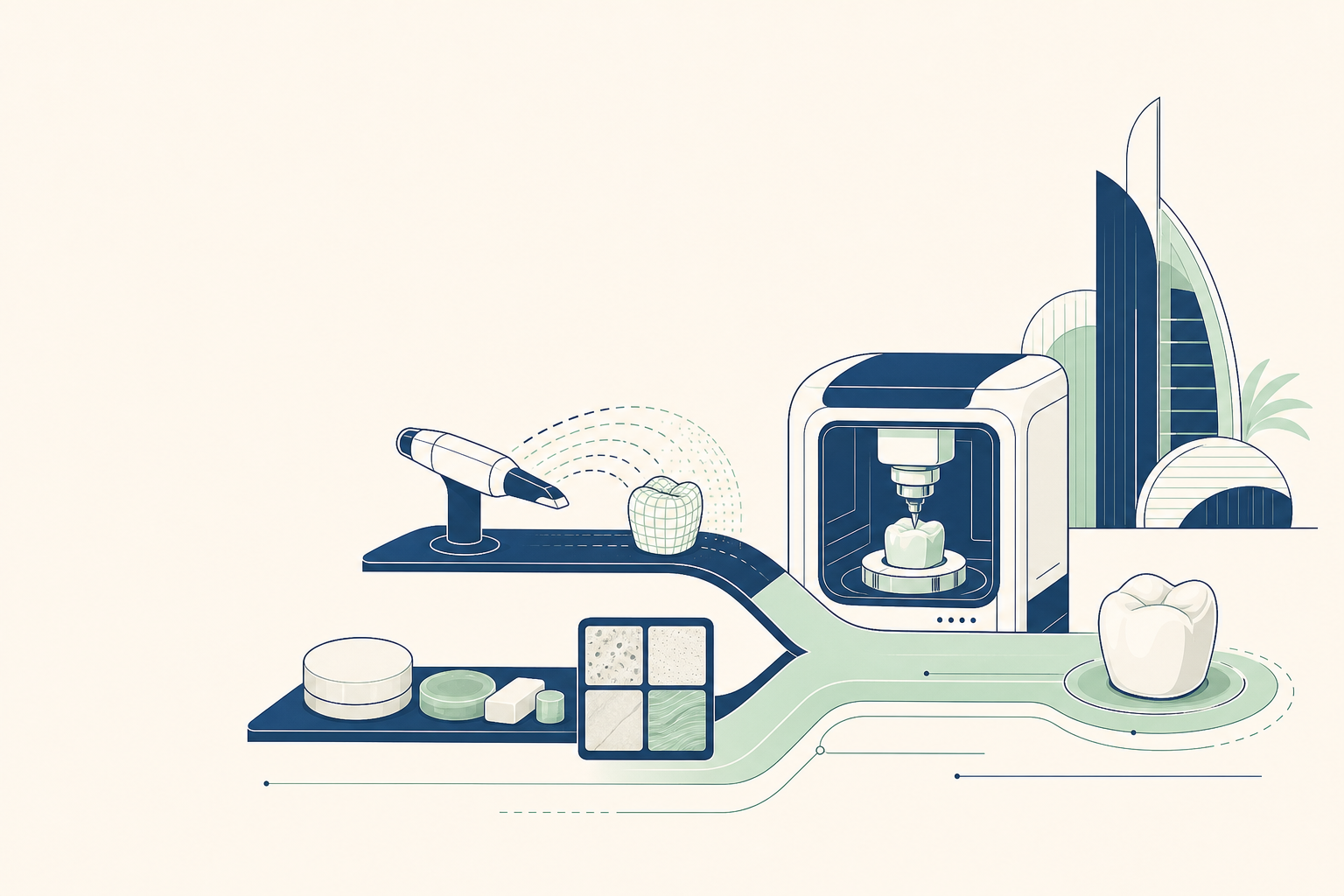
A conventional crown may require an impression, temporary crown, laboratory fabrication and a later cementation visit. Digital dentistry replaces the physical impression with an intraoral scan, sends the design to software and fabricates the restoration in the clinic.
- Scan: teeth, gingiva and occlusion are recorded digitally
- Design: the crown follows the prepared tooth and opposing bite
- Make: a block is milled or a restoration is printed and post-processed
- Fit: contacts, margins, shade and bite are checked clinically
The protocol, step by step
The dentist examines the tooth, checks the pulp and periapical tissues when indicated, removes decay or defective material, and prepares enamel and dentine with a defined finish line. Retraction and moisture control expose the cervical margin. The scan captures the preparation, adjacent teeth and opposing arch. Software designs the occlusal anatomy, proximal contacts and emergence profile. The restoration is fabricated, tried in, adjusted, polished or glazed, then bonded or cemented after surface treatment.
- Anesthesia and rubber dam or other isolation may be used
- Lithium disilicate and zirconia require different conditioning protocols
- Resin-ceramic blocks may be milled and polished chairside
- Printed restorations require washing, light curing and often heat treatment before final use
The one rule that matters
The crown must seal the prepared tooth and restore function without injuring the pulp, periodontal tissues or opposing tooth. A fast workflow cannot compensate for an open margin, contaminated bonding field, inadequate thickness, unstable occlusion or untreated caries.
- The finish line should be visible and clean
- The proximal contact should permit appropriate cleaning
- The bite must be checked in maximum intercuspation and excursions
- The cervical contour should respect the gingival sulcus
Myth: same-day means lower quality
Not automatically. The outcome depends on diagnosis, preparation geometry, material selection, bonding or cementation, occlusal control and finishing. A milled crown is not simply printed plastic. Common options include feldspathic ceramic, lithium disilicate, zirconia, hybrid ceramic and temporary resin materials. Each has different strength, translucency, wear and bonding behavior.
- Lithium disilicate can provide a glass-ceramic bond when etched and silanated correctly
- Zirconia is not etched like glass ceramic and commonly uses air abrasion plus a phosphate-containing primer or cement
- Printed permanent materials are developing, but their indication depends on the specific material and regulatory approval
- A laboratory remains valuable for complex shade characterization, multi-unit cases, implant work and difficult occlusion
Make it yours: what changes the plan
A molar with heavy chewing forces, limited enamel, deep subgingival margins, a cracked tooth, bruxism, little remaining tooth structure or an uncertain pulp may need a different material or a laboratory workflow. An anterior tooth with high cosmetic demands may require layered ceramic or laboratory characterization rather than a rapid monolithic restoration.
- Ask which material is planned and why it fits the tooth
- Ask whether the pulp, root and periodontal tissues are healthy enough for treatment
- Tell the dentist about grinding, clenching, sensitivity and previous restorations
- The final choice should match anatomy, force, isolation, appearance and cleansability
When to see a dentist
Seek an examination for pain on biting, lingering hot or cold sensitivity, swelling, a loose or fractured filling, a darkened tooth, food trapping or a crown that feels high. These symptoms can indicate caries, a cracked cusp, pulpal inflammation, apical disease or periodontal problems. A same-day crown is not a substitute for treating the cause.
- Urgent swelling, fever, difficulty swallowing or difficulty breathing needs prompt care
- A painful tooth may need endodontic treatment before restoration
- A crown should not be placed over active decay or an unstable gum condition
- Digital speed is useful only when the diagnosis is sound
So, is the lab business shrinking?
For selected single crowns, some fabrication has moved into the dental clinic. The laboratory business is not disappearing. Laboratories still contribute to complex cases, implant restorations, removable prostheses, layered aesthetics, quality control and production capacity. The practical answer is simple: same-day crowns are a workflow option, not a universal replacement for clinical judgment or laboratory expertise.
- Book an assessment with Dental Nation to learn whether your tooth is suitable
- Discuss material, isolation, bite, shade and long-term maintenance before treatment
- After brushing, spit rather than rinse, and clean between teeth with an interdental brush where the gap allows or floss where it fits