Dental Tourism: The Real Economics
Why lower treatment fees can reflect a different clinical business model, not a simpler biological problem.
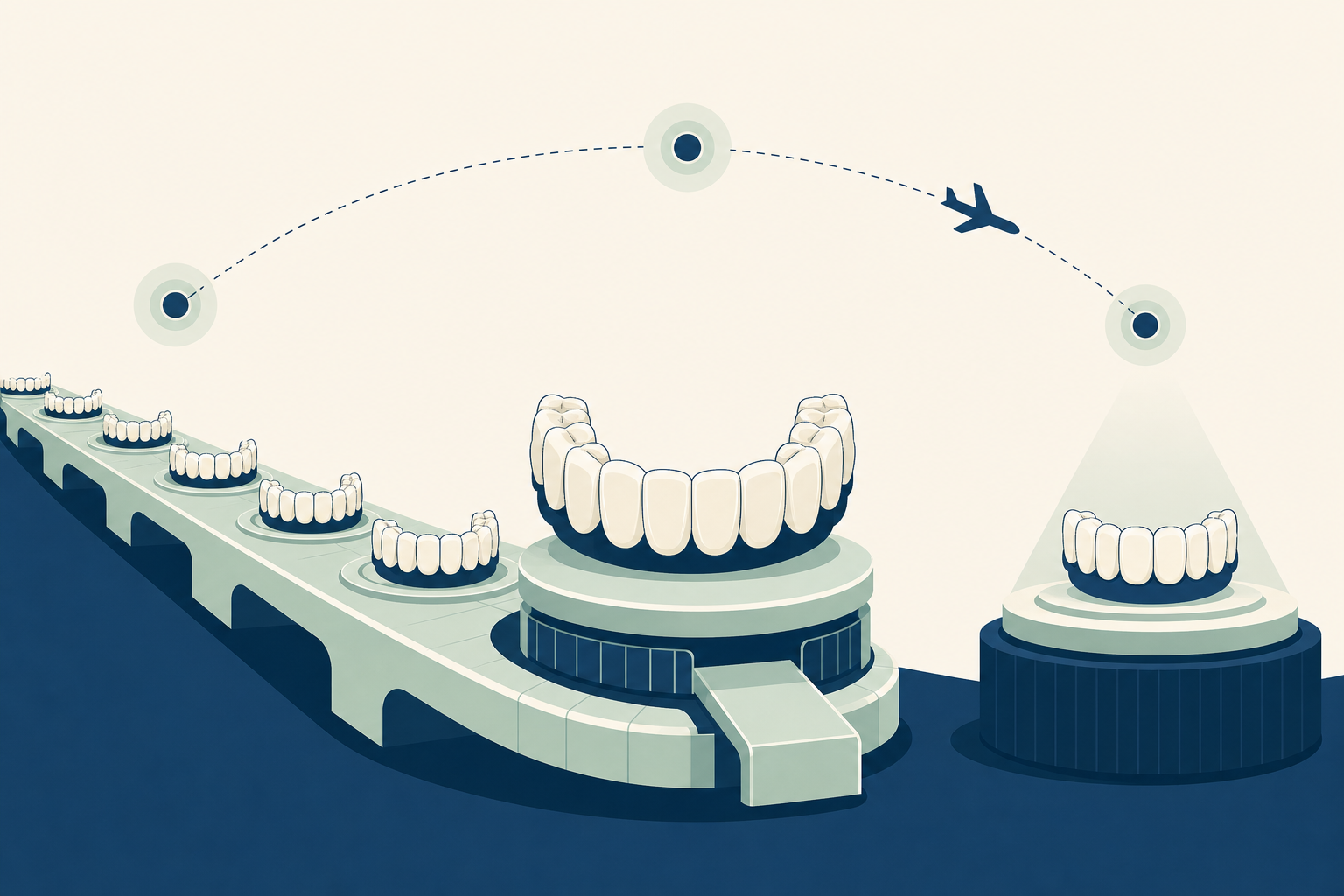
8-slide carousel · storyboard copy
Dental Tourism: The Real Economics
Full-mouth rehabilitation may involve implants, crowns, bridges, root canal treatment, periodontal therapy, or a combination. The biological requirements remain the same whether treatment is delivered locally or abroad.
The treatment is not one procedure
A full-mouth rebuild starts with diagnosis, not tooth preparation. Clinicians assess the teeth, gingiva, alveolar bone, occlusion, temporomandibular joints, saliva, caries risk, and periodontal inflammation.
- Clinical examination and periodontal charting
- Periapical radiographs and, when indicated, cone-beam CT
- Assessment of vertical dimension, tooth wear, and bite stability
- Review of smoking, diabetes, medications, hygiene, and previous treatment
The clinical protocol
The sequence protects the foundations before placing definitive restorations. Active disease must be controlled before implants or extensive crowns are completed.
- Treat caries and perform root canal treatment when the pulp is irreversibly inflamed or necrotic
- Control gingivitis or periodontitis with professional debridement and daily plaque removal
- Extract teeth that cannot be predictably restored, preserving alveolar bone where possible
- Plan implant position from the intended crown, using titanium implants and a stable bone and soft-tissue envelope
- Use provisional restorations to test speech, chewing, aesthetics, cleansability, and occlusion
- Place definitive restorations such as zirconia or porcelain-fused-to-metal crowns only after the bite and tissues are stable
The rule that matters
Do not judge treatment by the number of crowns or implants placed. Judge it by diagnosis, tissue health, prosthetic design, maintenance access, and a documented plan for managing complications.
- A crown covers a prepared tooth but does not cure periodontal disease
- An implant replaces a root form but does not prevent peri-implant mucositis or peri-implantitis
- A bridge distributes chewing forces through its abutment teeth
- Every restoration must remain cleansable at the gingival margin and between teeth
Mythbuster: cheaper is not automatically simpler
The final bill can reflect clinic overhead, laboratory arrangements, appointment density, travel costs, revision responsibility, and follow-up access. It does not change the anatomy of the maxilla, mandible, periodontal ligament, alveolar bone, or temporomandibular joints.
- Rapid treatment may require temporary teeth while tissues heal
- Immediate loading is possible only when case selection, implant stability, occlusion, and surgical conditions support it
- A veneer, crown, implant, or sinus lift still has material, biological, and maintenance limits
- Complications may include debonding, fracture, pulpal injury, infection, bone loss, or bite disturbance
Make the plan fit your mouth
The correct option depends on which teeth remain restorable, how much bone is present, and how forces are distributed during chewing. A patient with intact roots should not be treated like a patient with terminal periodontal disease.
- Preserve sound enamel and dentine whenever a tooth can be predictably restored
- Use interdental brushes where the space allows, and floss where it does not
- Clean implant crowns, bridge pontics, and contact areas with the devices their shape permits
- Spit after brushing with fluoride toothpaste and do not rinse with water immediately afterward
- Arrange a written maintenance plan before treatment, including hygiene reviews and repair pathways
When to see a dentist
Obtain an independent examination before committing to extensive treatment abroad or at home. The review should identify disease, restorability, alternatives, materials, staging, risks, and who will provide follow-up care.
- Seek urgent care for facial swelling, fever, difficulty swallowing, uncontrolled bleeding, or severe escalating pain
- Request copies of radiographs, CBCT scans, implant details, laboratory prescriptions, and treatment records
- Ask whether proposed extractions, implants, crowns, or root canal procedures are individually justified
- Clarify what happens if a restoration fractures, an implant loses bone, or symptoms persist after travel
The real economics
The best-value plan is the one that preserves healthy structure, controls disease, uses appropriate materials, and remains maintainable after treatment. Compare the complete clinical pathway, including diagnosis, healing time, travel, records, maintenance, and management of complications.
- Choose treatment based on biological evidence and long-term maintainability
- Bring a complete treatment plan to a qualified dentist for independent review
- Dental Nation can help assess your options and build a staged plan for care