The Sensitivity Sequence
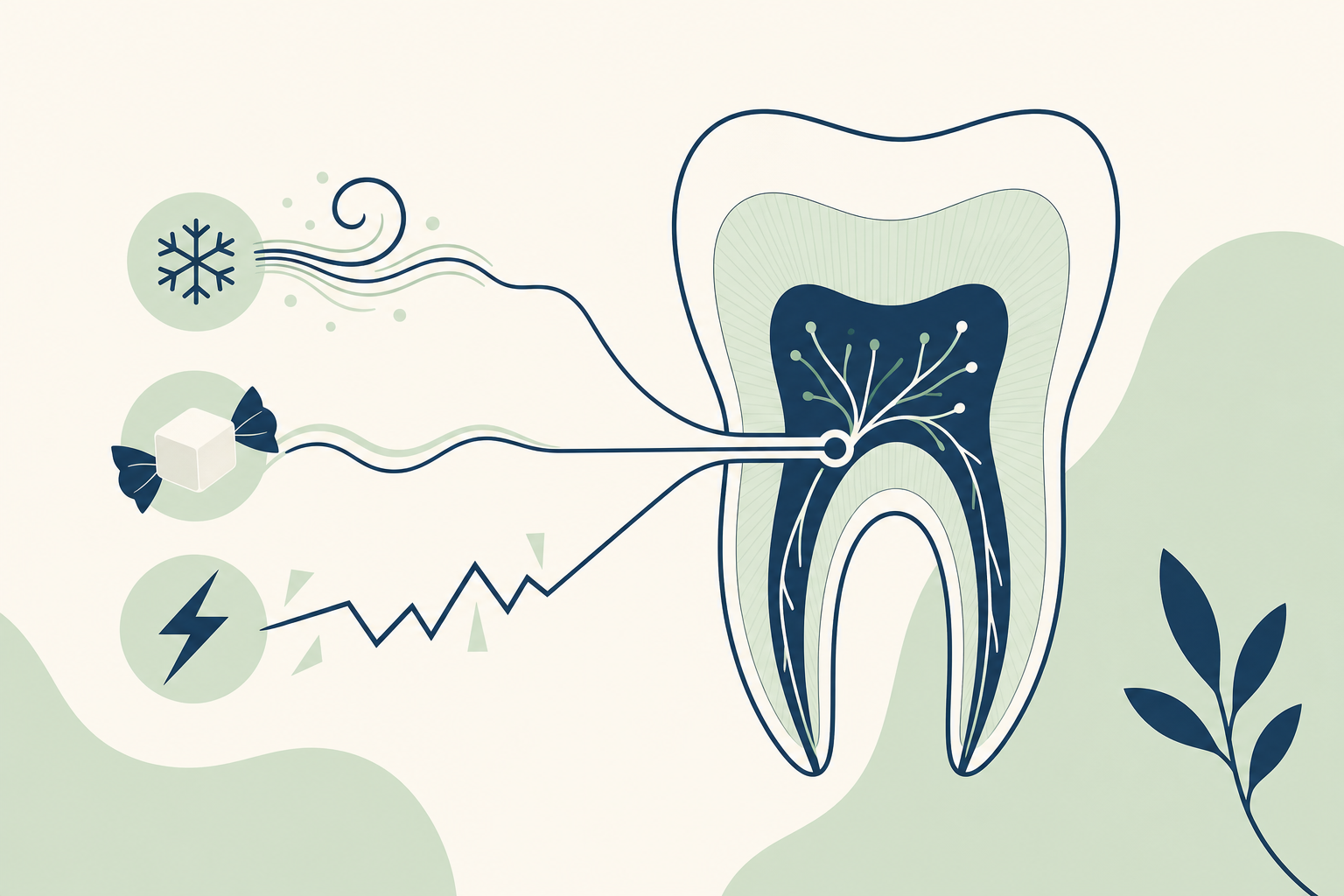
Cold air, sweet food, a sharp jolt: what each type of sensitivity is telling you.
8-slide carousel · storyboard copy
The Sensitivity Sequence
A sudden zing usually starts when exposed dentine allows fluid movement inside microscopic tubules. The trigger can suggest the mechanism, but the location, duration and pattern matter too.
- Cold air often points to exposed dentine or root surface.
- Sweet foods can enter open dentine tubules and draw fluid outward.
- A brief sharp pain is different from pain that lingers.
Why it matters
Enamel protects the crown. Cementum covers the root, and dentine lies beneath both. Dentine contains tubules that connect toward the pulp, where nerves and blood vessels are found. When enamel is worn, a filling margin leaks, or gum recession exposes the root, temperature and dissolved sugars can move fluid in the tubules. This pressure change can stimulate pulp nerves, known as the hydrodynamic mechanism.
- Cold air cools exposed dentine and moves tubule fluid.
- Sweet food creates an osmotic pull that can trigger fluid movement.
- Pain that lasts after the trigger stops can indicate pulpal inflammation rather than simple sensitivity.
The protocol: reduce the trigger and block the pathway
Use a soft-bristled toothbrush with gentle pressure and a fluoride toothpaste. Brush twice daily for about two minutes, then spit and do not rinse. If sensitivity is frequent, choose a desensitising toothpaste containing an established active ingredient such as potassium nitrate or stannous fluoride, and use it consistently according to the label. These work through nerve desensitisation, tubule occlusion, or both.
- Do not scrub horizontally at the gumline.
- Use interdental brushes where the gap allows. Use floss where an interdental brush does not fit safely.
- Limit repeated acidic drinks and rinse with water after them. Wait before brushing after an acidic exposure.
- A dentist may apply fluoride varnish or another professionally selected desensitising material, and may repair decay, a defective restoration or a worn area.
One rule: duration changes the meaning
A pain that stops within a few seconds after removing cold or sweet stimulation is commonly associated with exposed dentine, but it still needs assessment if persistent or worsening. Pain that lingers for tens of seconds or longer, starts without a trigger, wakes you at night, or hurts on biting may involve the pulp, a crack, decay or an infection.
- Record the tooth, trigger and how long the pain lasts.
- Do not repeatedly test the tooth with ice or very cold water.
- Avoid placing aspirin or concentrated chemicals on the gum or tooth.
Mythbuster: natural does not mean equivalent
Hydroxyapatite toothpaste is not equivalent to fluoride toothpaste. Fluoride helps enamel resist acid dissolution and supports remineralisation. Hydroxyapatite products may help reduce sensitivity by depositing mineral and occluding tubules, but they do not justify treating fluoride as unnecessary when fluoride is appropriate for the patient.
- Charcoal whitening is not proven to whiten teeth safely or predictably.
- Abrasive powders can remove surface stains while increasing wear or sensitivity.
- Mouthwash is an adjunct, not a substitute for brushing and cleaning between teeth.
Match the pattern to the likely source
If several teeth react to cold air after gum recession, exposed root dentine is possible. If one tooth reacts to sweet food around a filling, recurrent decay, a leaking margin or exposed dentine may be involved. If one tooth gives a sharp pain when releasing a bite, a crack or fractured cusp needs consideration. If pain follows whitening, temporary dentine sensitivity may occur, but severe or persistent pain is not something to ignore.
- Use a low-abrasion toothpaste if wear is suspected.
- Ask about acid exposure, grinding, recent whitening, gum recession and restorations.
- Treatment depends on the cause, not just the sensation.
When to see a dentist
Arrange an examination if sensitivity lasts more than a short period, affects one specific tooth, is getting worse, or returns repeatedly. Seek urgent dental care for facial swelling, fever, a bad taste with swelling, trauma, difficulty swallowing or difficulty breathing. The clinical assessment may include visual inspection, probing, cold testing, bite testing and dental radiographs when indicated.
- Decay can be hidden beneath a restoration or between teeth.
- A cracked tooth may require bite testing and magnification.
- Treatment may range from desensitising material or a small restoration to root canal treatment, depending on pulp and tooth findings.
Find the signal before you silence it
Notice the trigger, identify the tooth and time the pain. Protect exposed dentine with gentle fluoride brushing and appropriate interdental cleaning, then book an examination when the pattern is persistent, localised or lingering. Dental Nation can help identify the cause and match treatment to the tooth.
- Cold air: think exposed dentine or root surface.
- Sweet food: check for open tubules, decay or a restoration margin.
- Lingering or spontaneous pain: arrange prompt assessment.