The 3am Toothache Protocol
What actually dulls the pain until a dentist can see you, and the two things that make it worse.
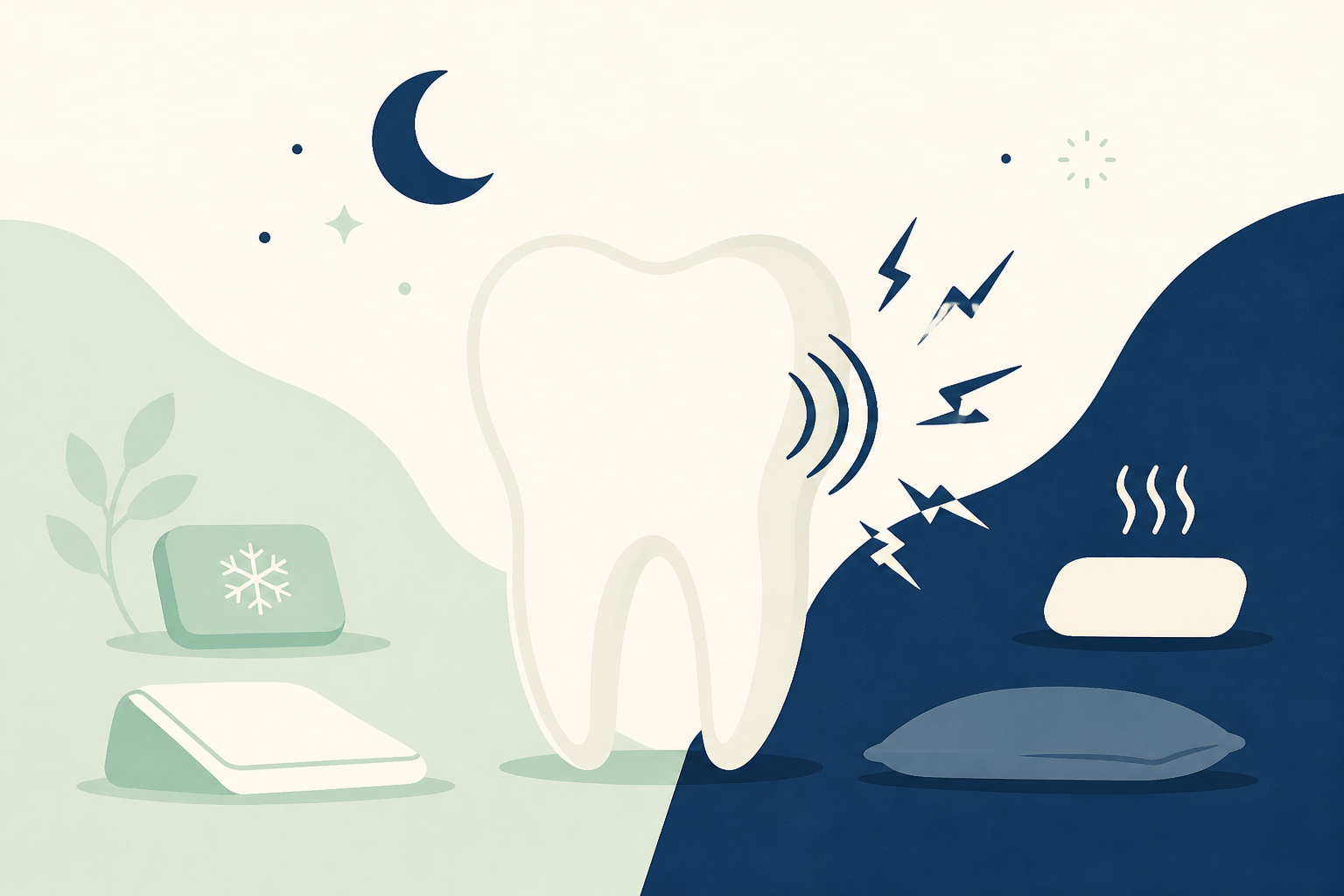
8-slide carousel · storyboard copy
The 3am Toothache Protocol
A practical plan for reducing toothache pain overnight while arranging dental care.
Why the pain can feel unbearable
Inflammation inside the pulp, the living tissue in the tooth’s central chamber, increases pressure around nerves. A cracked tooth, deep decay, a loose filling, or infection around the root can all trigger pain. Pain relief can reduce symptoms, but it cannot remove the cause.
- Pain that lingers after hot or cold food may indicate inflamed pulp.
- Pain on biting can occur when the periodontal ligament around the root is inflamed.
- Facial swelling may indicate infection spreading beyond the tooth.
The overnight protocol
First, remove food trapped between the teeth with an interdental brush if the gap allows, or floss gently. Brush with fluoride toothpaste using a soft-bristled brush. Spit, do not rinse. Then use an over-the-counter pain medicine only if it is safe for you and follow the UAE product label.
- Ibuprofen reduces prostaglandins involved in inflammation, but avoid it with a history of stomach ulcer or bleeding, kidney disease, certain heart conditions, blood thinners, NSAID allergy, or pregnancy unless a clinician says it is suitable.
- Paracetamol acts centrally on pain pathways and may be an option when ibuprofen is unsuitable. Do not exceed the label dose or combine products that also contain paracetamol.
- Apply a cold pack wrapped in cloth to the outside of the cheek for short intervals. Do not place ice directly on the skin or tooth.
- Sleep with the head slightly elevated if lying flat increases throbbing.
The one rule that matters
Keep chemicals and heat off the gum. Do not place aspirin, alcohol, concentrated clove oil, or other tablets directly on the tooth or gum. These substances can chemically burn the oral mucosa. Heat can increase blood flow and worsen pressure-related throbbing.
- Do not use a warm compress on a swollen face.
- Do not put aspirin against the gum. Swallowing it does not make it a topical treatment.
Mythbuster: pain relief is not a cure
A painkiller can interrupt pain signalling, but it does not drain an abscess, seal a cavity, repair a crack, or remove inflamed pulp. Antibiotics also do not replace dental treatment. They are prescribed only when a dentist identifies a suitable indication, such as systemic involvement or spreading infection.
- Do not start leftover antibiotics.
- Do not stop dental care because the pain temporarily disappears.
- Do not use topical numbing gels repeatedly or swallow them.
Match the plan to the symptom
For sharp pain from cold air or drinks, avoid the trigger and keep the area clean. For pain on biting, chew on the opposite side and avoid hard foods. For a lost filling or chipped tooth, cover a sharp edge with orthodontic wax if available. Never glue a crown or fragment back with household adhesive.
- If food is wedged, remove it gently rather than forcing a sharp object between the teeth.
- If a tooth has been knocked out, hold it by the crown, not the root, and seek emergency dental care immediately.
- Record what triggers the pain, how long it lasts, and which medicine and dose you took.
Know when it cannot wait
Arrange a dental appointment as soon as possible for persistent, recurrent, spontaneous, or sleep-disrupting toothache. Seek urgent emergency care now for facial or neck swelling, difficulty breathing or swallowing, inability to open the mouth normally, fever with worsening dental pain, confusion, severe weakness, or swelling near the eye.
- A dentist may examine the tooth, test pulp response, check the periodontal tissues, and take dental radiographs when indicated.
- Treatment may include a restoration, repair of a crack, root canal treatment, extraction, or drainage depending on the diagnosis.
- Bring the medicine packaging and disclose pregnancy, allergies, medical conditions, and current medicines.
Get through the night, then treat the tooth
Clean gently, use suitable labelled pain relief, cool the cheek, avoid heat and chemical burns, and book dental care. If swelling affects breathing or swallowing, treat it as an emergency.
- Save this protocol for the next unexpected toothache.
- Contact Dental Nation to arrange an assessment and definitive treatment.