The Braces and Aligners Care Protocol: A Clean Mouth Around the Hardware
Braces double the places plaque hides. Here is the cleaning routine that keeps you cavity-free and your treatment on schedule.
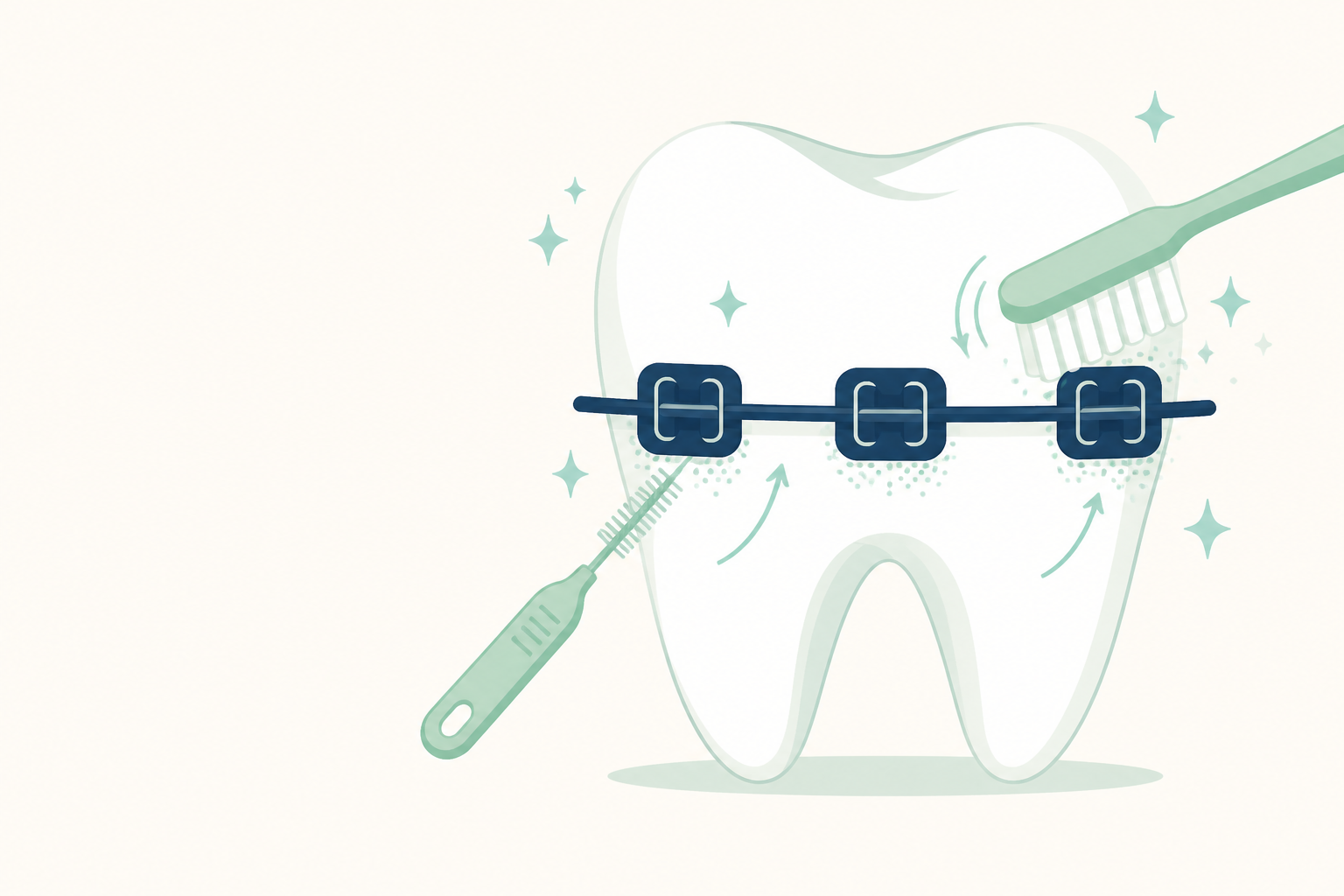
9-slide carousel · storyboard copy
Clean teeth. Clean hardware. Steady treatment.
Fixed braces use metal or ceramic brackets bonded to enamel, an archwire, and elastic modules. Clear aligners are removable thermoplastic trays. Both can trap plaque unless every tooth surface is cleaned deliberately.
- Audience: UAE dental patients and the general public
- Goal: reduce plaque, gingivitis, enamel demineralisation, and appliance damage
Why orthodontic appliances change the job
Plaque collects around bracket edges, beneath the archwire, beside elastic modules, along the gum margin, and in contact points between teeth. Bacteria metabolise sugars into acids. Repeated acid exposure can remove minerals from enamel, causing white-spot lesions and cavities. Plaque at the gingival margin can inflame the gingiva, causing redness, swelling, and bleeding.
- Clean enamel above and below every bracket
- Clean the gum margin and interdental spaces
- Remove aligners before eating or drinking anything except water
The daily protocol
Use a soft manual or electric toothbrush and fluoride toothpaste. Angle the bristles toward the gum margin, then toward the bracket, and then beneath the archwire. Brush for about two minutes, covering the outer, inner, and chewing surfaces. Use an interdental brush under the wire and between teeth wherever it fits without force. Use floss with a threader or orthodontic floss if the contact is too tight for a brush. Rinse removable aligners with cool or lukewarm water, brush them gently, and clean your teeth before replacing them.
- Brush twice daily and after meals when practical
- Use a single-tuft brush around bracket corners if needed
- Avoid hot water on thermoplastic aligners because heat can distort them
- Keep aligners in their case during meals, not in a tissue
Control the causes of damage
Limit frequent sugary drinks, juice, sweets, and sticky snacks because each exposure can feed acid production. Choose water between meals. Cut hard foods into small pieces. Do not bite pens, ice, hard sweets, or directly into foods that can bend the archwire or detach a bracket. Wear prescribed elastics for the instructed hours.
- If you drink an acidic beverage, wait before brushing so softened enamel is not scrubbed immediately
- Do not clean aligners with abrasive powders or very hot water
- Replace a lost or damaged aligner according to your orthodontist’s instructions
The one rule that protects enamel
After brushing with fluoride toothpaste, spit out the excess and do not rinse with water. Rinsing removes much of the fluoride left on the enamel surface. If a fluoride mouthwash is prescribed or selected, use it at a different time from brushing, not immediately afterward.
- Fluoride supports enamel remineralisation and reduces acid-related mineral loss
- Do not treat hydroxyapatite toothpaste as equivalent to fluoride toothpaste
- Use only products suitable for your age and clinical needs
Mythbuster: floss is not the only option
Interdental brushes are often preferable around fixed braces where the gap allows because they can pass under the archwire and clean the side surfaces of brackets and teeth. They must fit comfortably. A brush that is too large can injure the papilla or gum tissue. Floss remains useful for tight contacts and for people who can thread it effectively.
- Use the smallest brush that cleans the space without force
- Bleeding usually signals plaque-related inflammation, so improve technique and consistency
- Persistent bleeding, pain, or swelling needs a dental assessment
Make the routine fit your appliance
For fixed braces, carry a travel toothbrush, fluoride toothpaste, interdental brushes, and floss threaders. For aligners, keep a case and remove trays before meals. Clean the teeth before reinserting trays. If attachments, buttons, elastics, crowding, or gum recession make an area difficult, ask the orthodontic team to demonstrate the correct brush size and angle.
- Tight contact: floss or a floss threader
- Space under wire: interdental brush
- Bracket corner: single-tuft brush
- Removable tray: rinse, brush gently, and store safely
Know when to contact the dental team
Contact your dentist or orthodontist for a loose bracket, bent or poking wire, lost attachment, cracked aligner, persistent pain, marked gum swelling, pus, facial swelling, or a tooth that becomes unusually sensitive. Keep routine dental examinations during orthodontic treatment so enamel, gingiva, and existing restorations are checked as the teeth move.
- Use orthodontic wax temporarily over a rubbing wire or bracket
- Seek urgent care for facial swelling, fever, difficulty swallowing, or difficulty breathing
- Do not wait for the next adjustment if an appliance is damaged
Your two-minute habit protects the result
Brush with fluoride toothpaste, clean between the teeth and around the hardware, control sugary exposures, and keep aligners clean and correctly worn. Save this protocol and use it at your next brushing session.
- Start with the gum margin
- Clean above, around, and below each bracket
- Spit, do not rinse
- Book regular dental and orthodontic reviews