The Healthy Gums Protocol: Stop the Bleeding Before It Becomes Bone Loss
A practical routine for bleeding gums, early gingivitis, and protecting the bone around your teeth.
9-slide carousel · storyboard copy
Bleeding is a warning sign
Blood when brushing usually means inflamed gingiva, the soft tissue around each tooth. It is not a reason to brush less firmly or skip the area. With consistent plaque control, early gingivitis can improve over several weeks.
- Bleeding is not considered healthy
- The aim is to remove plaque at the gum margin
- Untreated inflammation can progress to periodontitis and bone loss
What is happening under the gum
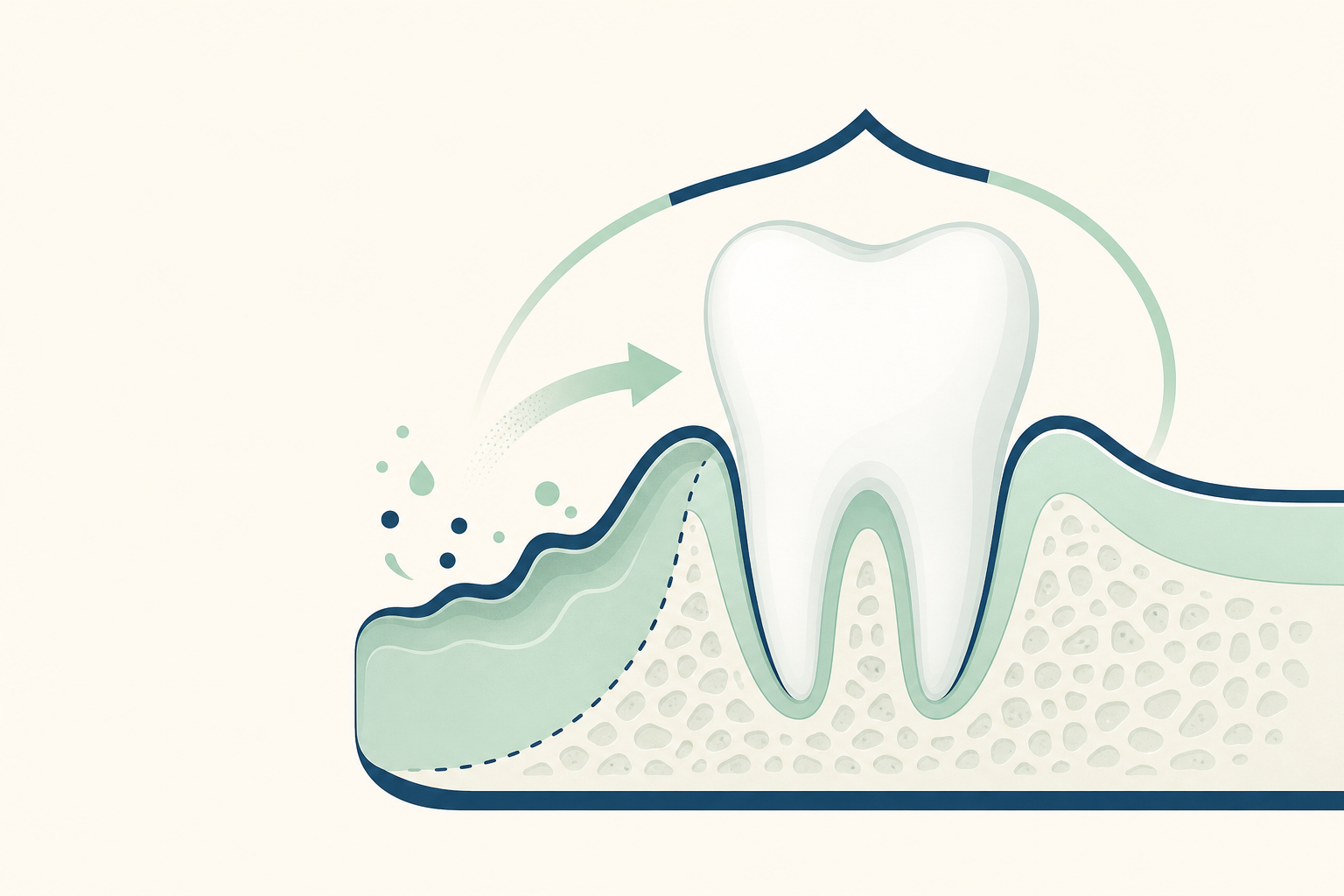
Dental plaque is a sticky biofilm containing bacteria and their by-products. When plaque remains beside the gingival sulcus, the shallow space between tooth and gum, the tissue becomes red, swollen, and prone to bleeding. In periodontitis, inflammation damages the periodontal ligament and alveolar bone that support the tooth.
- A hard deposit called calculus cannot be removed reliably with a toothbrush
- Bleeding can also be linked to pregnancy, smoking, diabetes, blood thinners, or other medical conditions
- Persistent bleeding needs assessment, especially with bad taste, loose teeth, pus, or swelling
The protocol: morning and night
Use a soft-bristled toothbrush with fluoride toothpaste. Place the bristles at the gum margin, angled toward the sulcus, and clean with small, gentle movements for about two minutes. Cover the outer, inner, and chewing surfaces of every tooth.
- Use toothpaste containing about 1,450 ppm fluoride for most adults
- Clean the tongue lightly if coating or odor is present
- Spit out the toothpaste after brushing. Do not rinse with water
- Replace the brush or brush head when bristles become splayed
Clean between every tooth once daily
Interdental plaque is often missed by brushing. Choose an interdental brush that fits without force. Pass it through the space and move it in and out once or twice. Where the space is too tight, use dental floss or tape and curve it around each tooth in a C shape, sliding gently below the gum edge.
- Interdental brushes are preferable where the gap allows
- Never force a brush into a tight contact
- A small amount of bleeding can occur at first when inflamed tissue is cleaned consistently
- If bleeding continues after several weeks of careful cleaning, arrange a dental examination
The one rule that matters
Do not stop cleaning because the gums bleed. Continue gentle plaque removal at the gum margin and between the teeth every day. Brushing softer while avoiding the bleeding sites leaves the biofilm in place and allows inflammation to continue.
- Gentle pressure is enough
- Pain, ulceration, or heavy bleeding is not a normal target of the routine
- Do not substitute oil pulling, charcoal, or herbal rinses for mechanical plaque removal
Myth: bleeding means you should avoid that area
Usually, bleeding means the gum is inflamed. Removing plaque helps the tissue settle. Mouthwash is optional and cannot remove established plaque or calculus. Alcohol-free products may be more comfortable for some people, while chlorhexidine should be used only as directed because it can stain teeth and alter taste.
- Fluoride toothpaste has strong evidence for preventing tooth decay
- Hydroxyapatite should not be described as equivalent to fluoride
- Charcoal whitening is not proven to safely whiten teeth or protect gums
- Mouth taping is not part of gum-disease treatment
Make the routine fit your mouth
The correct interdental brush depends on the space between your teeth. For example, a narrow brush may fit between crowded lower incisors, while a wider size may clean an open space beside a molar. People with braces, bridges, implants, or gum recession may need threader floss, a single-tuft brush, or several brush sizes.
- Use a mirror and good lighting for the first few days
- Clean around orthodontic brackets and under bridge connectors
- If dexterity is limited, try an electric toothbrush with a pressure sensor
- Record bleeding areas so you can check whether they improve
When home care is not enough
A dentist or hygienist should examine persistent bleeding, measure gum pockets with a periodontal probe, and check for calculus, cavities, defective fillings, trauma, or medication effects. Professional scaling removes calculus above and below the gum margin. If pocket depths and bone loss indicate periodontitis, treatment may require deep cleaning and ongoing periodontal maintenance.
- Seek prompt care for facial swelling, fever, pus, severe pain, or a loose tooth
- Mention pregnancy, diabetes, smoking, and medicines that affect bleeding
- A dental X-ray may be needed when bone loss is suspected
- Do not wait for pain, because gum disease can progress with little pain
Start tonight
Brush the gum margins with fluoride toothpaste, clean between the teeth with the right-sized interdental brush or floss, spit without rinsing, and repeat daily. Healthy gums should not routinely bleed. If the bleeding does not settle with careful cleaning, book a periodontal assessment.
- Brush twice daily
- Clean between teeth once daily
- Track improvement over the next few weeks
- Get professional care when deposits or persistent inflammation remain