The Fresh Breath Protocol: Why Mints Make It Worse
Bad breath usually starts in the mouth, especially on the back of the tongue. Sugary mints mask the smell while feeding acid-producing bacteria. Here is what actually helps.
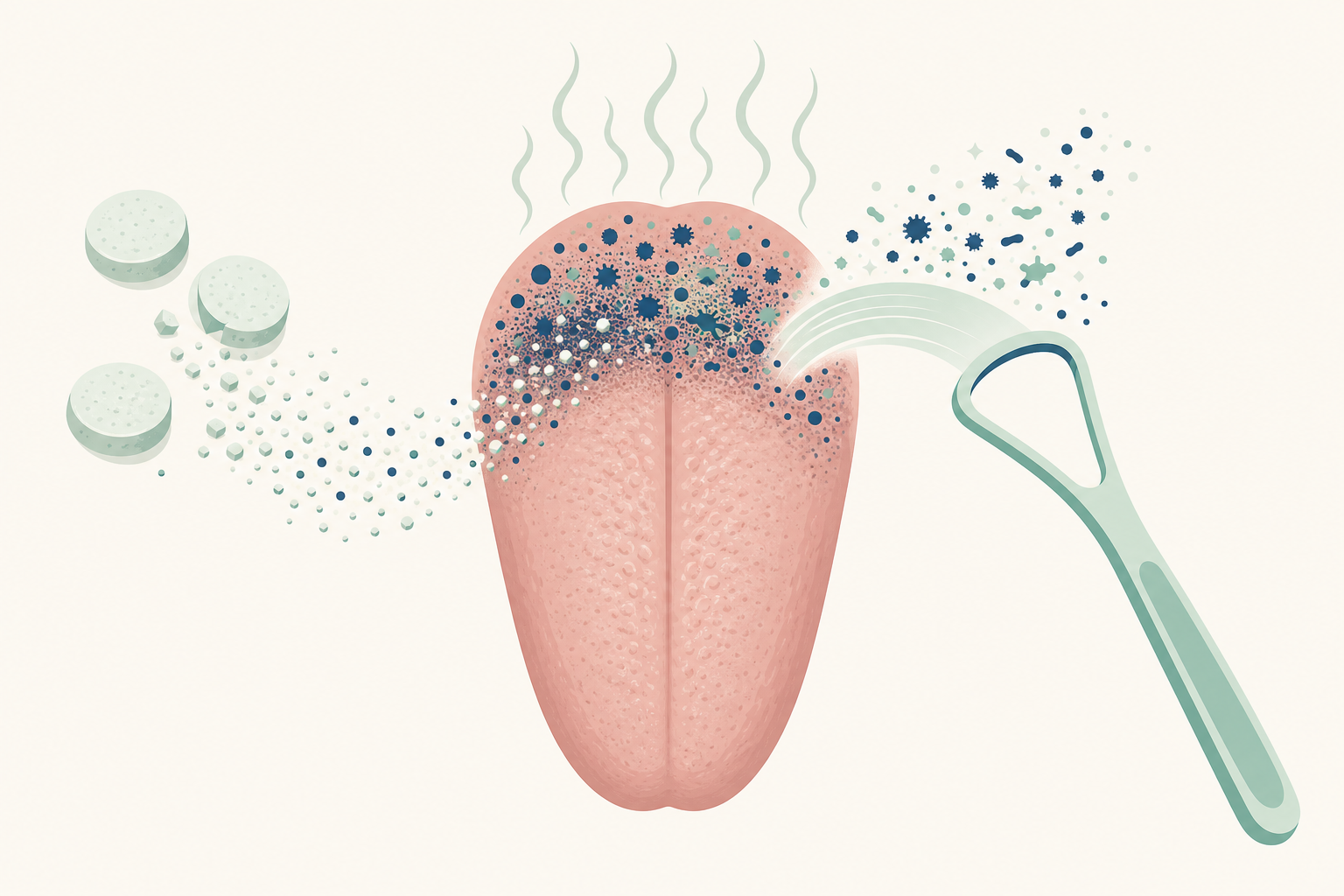
8-slide carousel · storyboard copy
Fresh breath starts where the smell starts
Most persistent mouth odour begins in the oral cavity, not the stomach. The main source is often the coated back surface of the tongue, where bacteria break down proteins into volatile sulfur compounds.
- Think tongue, gums, teeth and saliva first
- Sugar-coated mints can add fermentable carbohydrate
- The goal is to remove the cause, not cover the odour
Why the back of your tongue matters
The posterior dorsum of the tongue has papillae and grooves that retain mucus, shed cells and food proteins. Anaerobic bacteria use this material and release compounds such as hydrogen sulfide and methyl mercaptan. Gum disease, plaque, tooth decay and dry mouth can add further sources.
- A white or yellow coating can hold odour-producing bacteria
- Bleeding or swollen gums may indicate gingivitis or periodontitis
- The stomach is an uncommon explanation for ordinary persistent mouth odour
The protocol: clean the source
Use a simple daily sequence that reaches the tongue, tooth surfaces and spaces between teeth.
- Brush for two minutes twice daily with fluoride toothpaste, using a soft-bristled brush along the gumline
- After brushing, spit out the toothpaste. Do not rinse with water
- Gently scrape or brush the tongue once daily, moving from the back toward the tip without causing bleeding
- Clean between teeth once daily. Use an interdental brush where the gap allows; use floss where the space is too tight
- Drink water regularly and address dry mouth with a dentist or doctor if it persists
- If using mouthwash, treat it as an add-on, not a substitute for mechanical cleaning
The one rule that matters
Choose sugar-free, preferably xylitol-containing gum or mints if you need a temporary breath freshener. Sugar-free chewing gum can stimulate saliva. Sugary mints dissolve around the teeth and provide fermentable carbohydrate to plaque bacteria, increasing acid exposure and cavity risk.
- Check the ingredients for sugar, sucrose, glucose syrup or fructose
- Do not suck a sugary mint repeatedly throughout the day
- Freshener products do not remove tongue coating, plaque or calculus
Myth: bad breath is always from the stomach
Usually, no. Oral causes are far more common, including tongue coating, gum disease, decay, trapped food, dentures and reduced saliva. Garlic and some foods can also produce odour after absorption and exhalation. Reflux, sinus disease, tonsil problems and other medical conditions are possible, but they need assessment when oral cleaning does not solve the problem.
- Do not diagnose the cause from smell alone
- Charcoal whitening is not a proven treatment for halitosis
- Mouth taping is not a recommended breath treatment
Make the routine fit your mouth
The correct interdental tool depends on the size and shape of each space. A brush should pass with gentle resistance without forcing. Floss is suitable for tight contacts and remains a useful option. Dentures should be cleaned separately and removed at night unless your dentist gives different instructions.
- Crowded teeth may need floss or narrow interdental brushes
- Open spaces, bridges and implants often need larger interdental brushes or specialist tools
- Braces require careful cleaning around brackets and wires
- If your mouth feels dry, review medicines, mouth breathing and hydration with a clinician
When home care is not enough
Book a dental examination if bad breath continues for a few weeks despite consistent cleaning, or if you have bleeding or swollen gums, toothache, loose adult teeth, a bad taste, pus, a persistent mouth sore or denture problems. The dentist can inspect the tongue, teeth, gums, periodontal pockets, restorations and dentures, then remove calculus and treat decay or gum disease.
- Persistent odour can be a sign of periodontal infection
- A professional assessment identifies causes that a mint cannot hide
- Seek urgent care for facial swelling, fever, difficulty swallowing or difficulty breathing
Replace the mint cycle with the fresh breath protocol
Tonight: brush with fluoride toothpaste, spit without rinsing, clean your tongue gently and clean between your teeth. Tomorrow, choose sugar-free gum or water instead of sugary mints. If the odour remains after a few weeks, arrange a dental examination.
- Clean the source
- Protect the enamel
- Get the cause checked if it persists