The Stain Defense Protocol: Keep Coffee, Lose the Yellow
You do not have to quit coffee, tea, or shisha. Change when and how you use them.
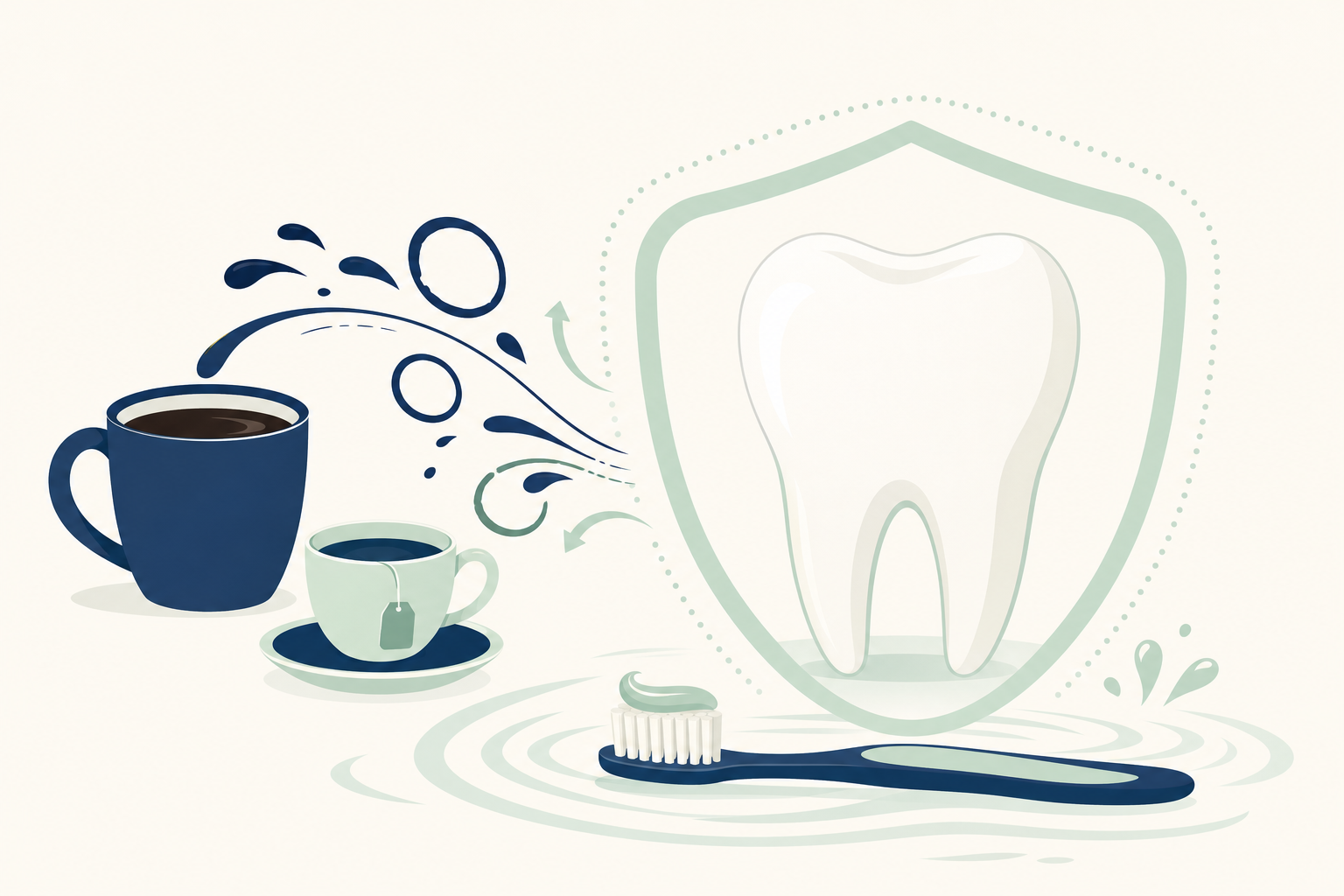
8-slide carousel · storyboard copy
Keep the coffee. Defend the smile.
Coffee, tea, and shisha can place dark pigments on the thin protein film covering enamel. A practical routine reduces contact time and removes plaque before pigments bind.
- Use the protocol daily
- Protect enamel and gum margins
- Treat established stains correctly
Why teeth turn yellow
Enamel is translucent, so the naturally yellow dentin beneath it contributes to tooth colour. Coffee and tea contain chromogens and tannins that adhere to the acquired pellicle and plaque. Shisha smoke adds tar and other particulate residues that collect near the gumline and in surface irregularities.
- Plaque holds pigments against enamel
- Calculus can trap and darken deposits
- Acidic drinks can soften enamel temporarily
The daily stain-defense protocol
Build the routine around timing, water, plaque control, and fluoride.
- Drink coffee or tea within a defined period rather than sipping for hours
- Take water after the drink to dilute and clear pigments
- For iced drinks, use a straw positioned behind the front teeth
- Brush twice daily for two minutes with fluoride toothpaste and a soft-bristled brush
- Clean between teeth daily; use an interdental brush where the space allows, or floss where it does not
- After brushing, spit out the toothpaste and do not rinse with water
The one rule that matters
Do not brush immediately after an acidic drink. Acid can temporarily soften the outer enamel surface, and aggressive brushing can increase wear. Rinse with water, wait about 30 minutes, then brush gently with fluoride toothpaste.
- Apply this to coffee with citrus, energy drinks, cola, and acidic tea blends
- Do not scrub harder to remove colour
- Replace a worn brush head
Mythbuster: whitening is not scrubbing
Whitening toothpaste can help remove some external surface stains through mild abrasives, but it does not change the underlying dentin colour. Professional whitening uses peroxide-based materials, commonly hydrogen peroxide or carbamide peroxide, to oxidise stain molecules within natural tooth structure. Charcoal whitening is not established as a reliable whitening treatment.
- Whitening does not change the colour of fillings, crowns, veneers, or bonding
- Overuse of abrasive products can increase sensitivity and surface wear
- Never place household bleach or non-dental chemicals on teeth
Make the routine fit your mouth
If you have tight contacts, slide floss gently through the contact and curve it around each tooth. If there is a wider embrasure, choose an interdental brush that passes with light resistance and does not force the gum. With braces, bridges, implants, dry mouth, or frequent shisha use, add the cleaning method that reaches the specific retention areas.
- Bleeding during cleaning often reflects inflamed gum tissue, not a reason to stop
- Ask a dental professional to size an interdental brush if unsure
- Choose fluoride toothpaste for cavity protection; hydroxyapatite is not equivalent to fluoride
When a dentist should take over
Book an examination if the colour change is a single dark tooth, a grey or brown patch, a line at the gum, or a stain that remains after brushing. The clinical sequence is examination, plaque and calculus removal with scaling and polishing when indicated, assessment for decay or enamel defects, then whitening planning if natural teeth are suitable. A dentist may also check whether a non-vital tooth, leaking restoration, or exposed root is causing the colour change.
- Pain, swelling, bad taste, or a broken tooth needs prompt assessment
- Whitening is delayed when decay, gum disease, or uncontrolled sensitivity is present
- Existing restorations may need colour-matched replacement after whitening
Your coffee can stay
Shorten pigment contact, drink water, remove plaque, protect enamel with fluoride, and use professional cleaning or peroxide whitening when surface care is not enough. Save this routine and use it with your next coffee, tea, or shisha session.
- Drink, follow with water, and avoid hours of sipping
- Spit after brushing, do not rinse
- Book an assessment for persistent or unexplained discoloration