The Morning Routine That Beats Morning Breath at the Source
Brushing first thing can mask odour briefly. This sequence removes the plaque, tongue coating and debris that produce it.
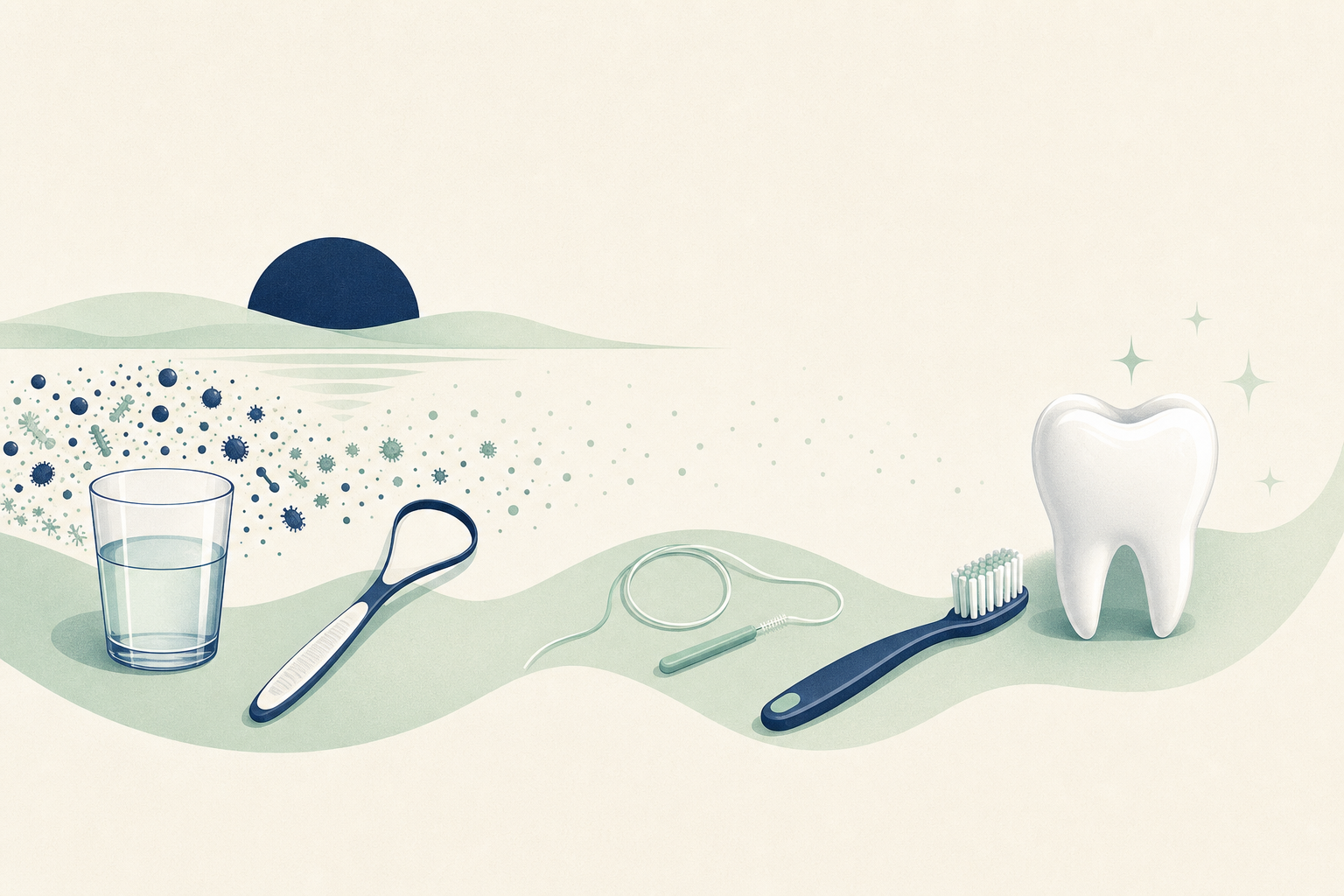
8-slide carousel · storyboard copy
Morning breath starts overnight
Reduced saliva flow during sleep lets oral bacteria act on proteins in plaque, tongue coating and trapped food. Their volatile sulphur compounds create the smell.
Fresh breath is an oral-cleaning problem
The main sites are the rough back of the tongue, the gumline and the spaces between teeth. Gingivitis, cavities, dental infection, dry mouth and dentures can also cause persistent odour.
- Tongue coating can hold odour-producing bacteria.
- Plaque at the gumline can inflame gums and create bleeding and bad taste.
- Saliva normally clears food particles and dilutes bacterial compounds.
The morning sequence
Use this order to physically remove the sources before you start the day.
- Drink water if your mouth feels dry.
- Clean between teeth once daily. Use an interdental brush where it fits snugly without force. Use floss for tight contacts, curving it around each tooth and sliding below the gum edge.
- Gently clean the tongue from back to front with a scraper or soft toothbrush. Stop if it causes pain or bleeding.
- Brush every tooth surface and the gumline for two minutes with a soft-bristled brush and fluoride toothpaste.
- Spit out the toothpaste. Do not rinse with water.
The one rule that protects the fluoride
Spit, do not rinse, after brushing. Water removes concentrated fluoride from the toothpaste film left on enamel. If you use mouthwash, use it at another time, such as after lunch, unless your dentist gives different instructions.
- Fluoride helps strengthen enamel and prevent tooth decay.
- Do not scrub harder to chase odour. Gentle pressure cleans without damaging gums.
Myth: a strong rinse fixes the cause
Mint flavour can cover odour while plaque, tongue coating, gum inflammation or dry mouth remains. Charcoal whitening is not established as a proven treatment for morning breath or safe whitening method. Do not use mouth taping to manage dry-mouth symptoms or breath.
- Mechanical cleaning is the foundation.
- Alcohol-free products may be more comfortable for some people with dry mouth, but product choice does not replace cleaning.
- Hydroxyapatite should not be described as equivalent to fluoride for cavity prevention.
Make it fit your mouth
Choose the tool that contacts the anatomy you need to clean. A correctly sized interdental brush should enter with light resistance and clean the side walls. If the space is too tight, use floss. Around braces, bridges or implants, a threader, specialist brush or water flosser may help with professional instruction.
- Dry mouth from medicines, mouth breathing, dehydration or air-conditioned environments can intensify odour.
- Sugar-free gum can stimulate saliva when appropriate.
- Clean dentures separately and remove them at night.
When breath needs a dental exam
Arrange an examination if odour continues for a few weeks despite daily cleaning, or if you have bleeding or swollen gums, tooth pain, a loose adult tooth, pus, a persistent bad taste or a denture problem. A dentist can check periodontal pockets, cavities, infection, tongue changes and dry-mouth causes, then provide professional cleaning or treatment when needed.
- Urgent assessment is needed for facial swelling, fever, difficulty swallowing or difficulty breathing.
- Persistent odour is not proof that the mouth is clean just because brushing gives brief relief.
Clean the source, not just the smell
Tomorrow morning: clean between the teeth, clean the tongue, brush twice for two minutes with fluoride toothpaste, then spit without rinsing. Save mouthwash for another time. If the smell persists, book a dental examination.
- Save this sequence for your next morning.
- Dental Nation can help identify the cause and create a routine for your mouth.