Myth vs Fact: Sugar-Free Means Tooth-Safe
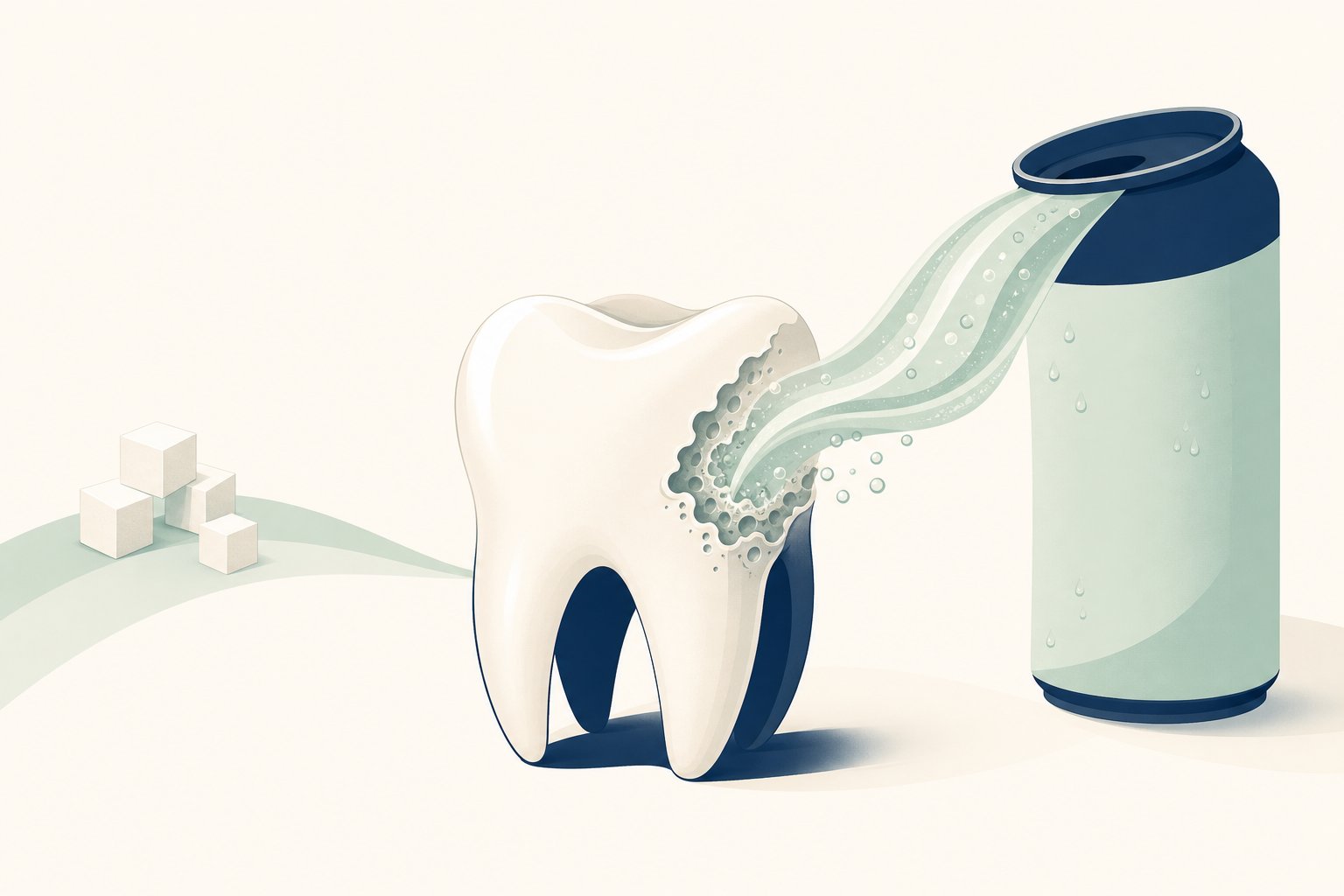
Acidity can damage enamel even when a drink contains no sugar.
8-slide carousel · storyboard copy
Myth vs Fact
Sugar-free does not automatically mean tooth-safe. A drink can contain no sugar and still be acidic enough to soften enamel.
Why it matters
Sugary drinks can feed plaque bacteria, which produce acids that cause tooth decay. Acidic drinks can also attack the tooth directly, causing dental erosion without bacteria.
- Common examples include diet soft drinks, energy drinks, sports drinks, flavoured sparkling water and drinks containing citric or phosphoric acid.
- Frequent sipping extends the time your teeth are exposed to acid.
Use the safer-drink protocol
Reduce both the strength and the contact time of acids with your teeth.
- Choose plain water most often.
- Have acidic drinks with a meal instead of sipping them across the day.
- Use a straw positioned toward the back of the mouth when practical.
- Afterward, drink or rinse with plain water. Wait before brushing, because softened enamel can be more vulnerable to abrasion.
- Check labels for citric acid, phosphoric acid and carbonation. Sugar-free describes the sweetener, not the acidity.
One rule that matters
Do not sip acidic drinks continuously. Finish them in a defined period, then switch to water. Saliva helps neutralise acids and restore minerals, but repeated acid attacks give enamel less recovery time.
- Sugar-free gum may help after food or drink because chewing stimulates saliva.
- It does not cancel the effect of an acidic beverage.
The myth, corrected
Myth: “If it is sugar-free, it cannot harm my teeth.” Fact: Sugar-free drinks usually reduce the risk of sugar-driven tooth decay, but an acidic drink can still dissolve minerals from enamel. The grain of truth is that removing sugar removes one important pathway to decay. It does not remove acid erosion.
- Enamel is the hard outer layer of the crown. Acid dissolves minerals from its surface.
- If erosion continues, enamel can thin, edges can chip, and dentin exposure can cause sensitivity.
- Erosion is chemical tooth wear. It is different from decay, although both can occur together.
Make it fit your routine
Look at your actual pattern, not only the product name.
- If you drink diet soda or flavoured sparkling water daily, reduce frequency first and replace some servings with plain water.
- If you have dry mouth, reflux, frequent vomiting or take acidic medicines, your risk may be higher.
- Brush twice daily with fluoride toothpaste. Spit after brushing rather than rinsing, so fluoride remains on the teeth.
- Where the gap allows, use an interdental brush. Floss remains useful where an interdental brush cannot fit.
When to see a dentist
Book an examination if you notice persistent sensitivity to cold or sweet foods, smooth or dull enamel, cupping on chewing surfaces, shortened teeth, chipped edges or increasing yellow colour from dentin showing through.
- A dentist can review your drinks, diet, reflux or vomiting, saliva flow and medicines.
- They can examine enamel and dentin, identify active tooth wear and recommend fluoride prevention, protective restorations or treatment of the underlying cause when needed.
Sugar-free is helpful, not a safety guarantee
Choose water most often, keep acidic drinks occasional, avoid prolonged sipping and protect your enamel with fluoride toothpaste. Save this checklist and review your usual drinks today.
- What is the first acidic drink you could replace with water?