Myth vs Fact: You Only Need a Dentist When Something Hurts
Most decay and gum disease are painless until they are expensive.
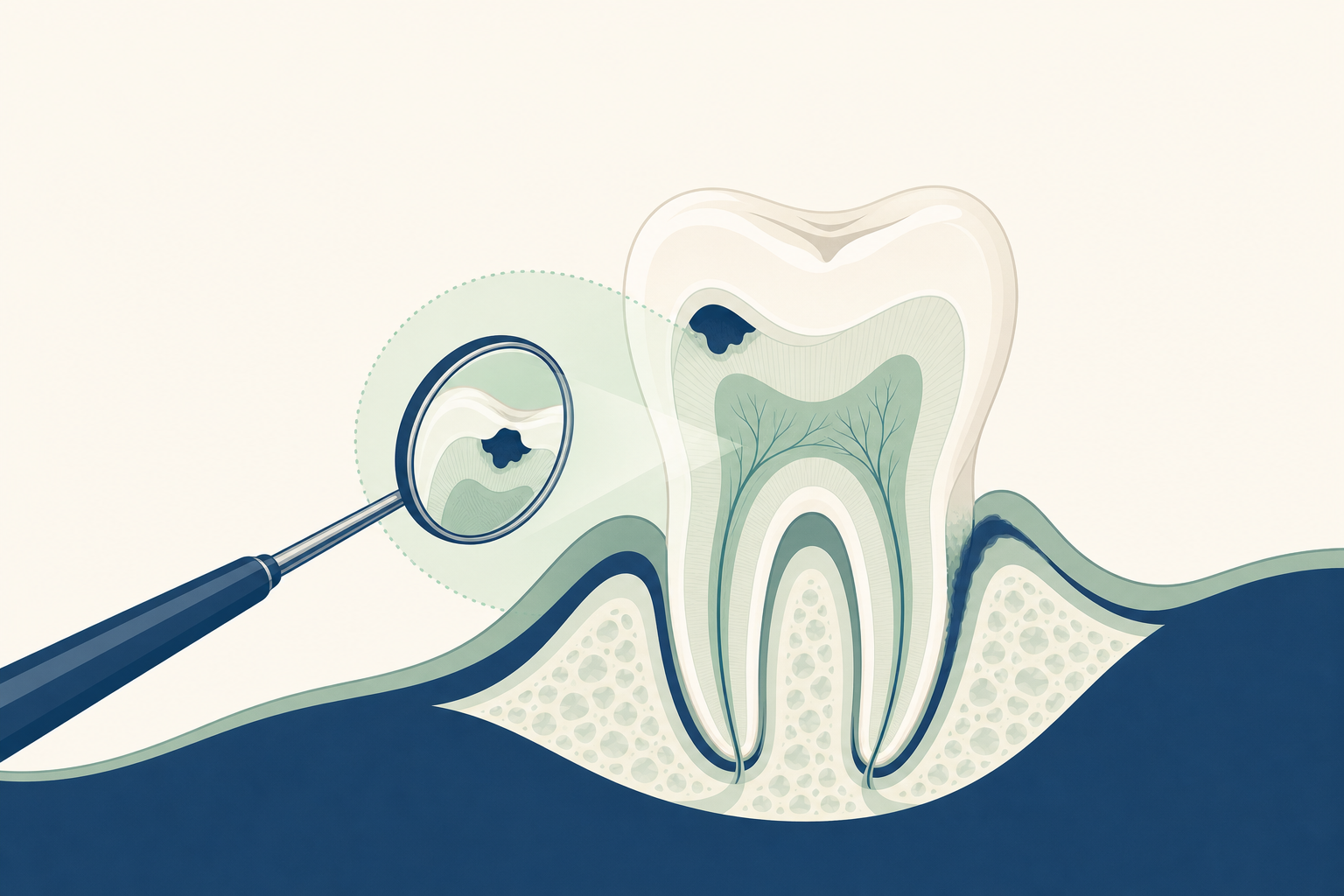
8-slide carousel · storyboard copy
Myth vs Fact
You only need a dentist when something hurts.
Why this matters
Tooth decay can begin in enamel without pain. Gum disease often starts in the gingiva, where inflammation and bleeding may develop before tenderness. Pain can appear later, when decay reaches dentine or the pulp, or when infection affects tissues around the root.
- No pain does not prove that teeth and gums are healthy.
- Early disease is usually simpler to control than disease involving the pulp, root or supporting bone.
- A dental examination can identify changes that are not visible in a bathroom mirror.
What prevention looks like
A dental visit combines history, examination and risk-based testing. The dentist checks teeth, fillings, crowns, the gingiva, bite and oral tissues. They may measure periodontal pockets with a probe and use bitewing radiographs when hidden decay between teeth is suspected.
- Brush twice daily with fluoride toothpaste, then spit instead of rinsing.
- Clean between teeth daily. Interdental brushes are preferable where the gap allows, while floss is useful for tighter contacts.
- Limit how often teeth are exposed to fermentable carbohydrates, especially between meals.
- Attend recall visits at an interval based on your decay, gum disease and restoration risk.
The one rule that matters
Do not use pain as your health check. Use a planned examination schedule based on risk, because enamel decay, early gum disease and failing dental work may be silent.
- Bleeding during cleaning is a sign to investigate, not a reason to stop cleaning.
- A filling or crown can look intact while decay develops at its margin.
- A dentist can compare findings over time and act before symptoms become urgent.
The myth contains one small grain of truth
Pain is an important warning sign. A toothache, sensitivity that lingers after hot or cold, swelling, a bad taste, or pain on biting can indicate inflamed pulp, an abscess, a cracked tooth or gum infection. But the absence of pain only means there is no symptom you can feel. It does not rule out disease.
- Fact: pain needs prompt assessment.
- Fact: painless disease can still progress.
- Fact: routine care helps detect problems before pain begins.
Make the plan fit you
Your recall interval should reflect your mouth, not a fixed calendar rule. Higher risk can come from previous cavities, frequent sugary drinks, dry mouth, smoking, gum disease, orthodontic appliances, pregnancy-related gum changes, or extensive fillings and crowns.
- Ask which findings determine your next recall date.
- Ask whether radiographs are clinically indicated and what they are checking.
- Tell the dentist about medicines, medical conditions and changes in bleeding or dry mouth.
When to see a dentist
Book an assessment for persistent tooth pain, facial or gum swelling, fever, a broken tooth, a loose permanent tooth, a dental injury, a mouth ulcer that does not heal, or sensitivity that persists after the trigger is removed. Seek urgent care for swelling that affects breathing or swallowing.
- Do not wait for pain if you have bleeding gums, food trapping, bad breath that persists, a visible cavity, or a loose filling or crown.
- A dental examination can determine whether the cause is decay, gum disease, wear, a crack, infection or something else.
Healthy teeth need a plan, not a pain signal
Keep routine dental examinations, clean between your teeth daily and act early when symptoms appear. Dental Nation can help you build a recall plan based on your clinical risk.
- Book your next dental assessment.
- Save this carousel for your next oral health check.
- Early action can protect tooth structure and supporting tissues.