The oral microbiome and colorectal cancer: Fusobacterium nucleatum moves from the mouth to the tumour
Strain-level genomics links an oral bacterium with colorectal tumours. Here is what the evidence shows, what screening can and cannot do, and why this is not yet a chairside test.
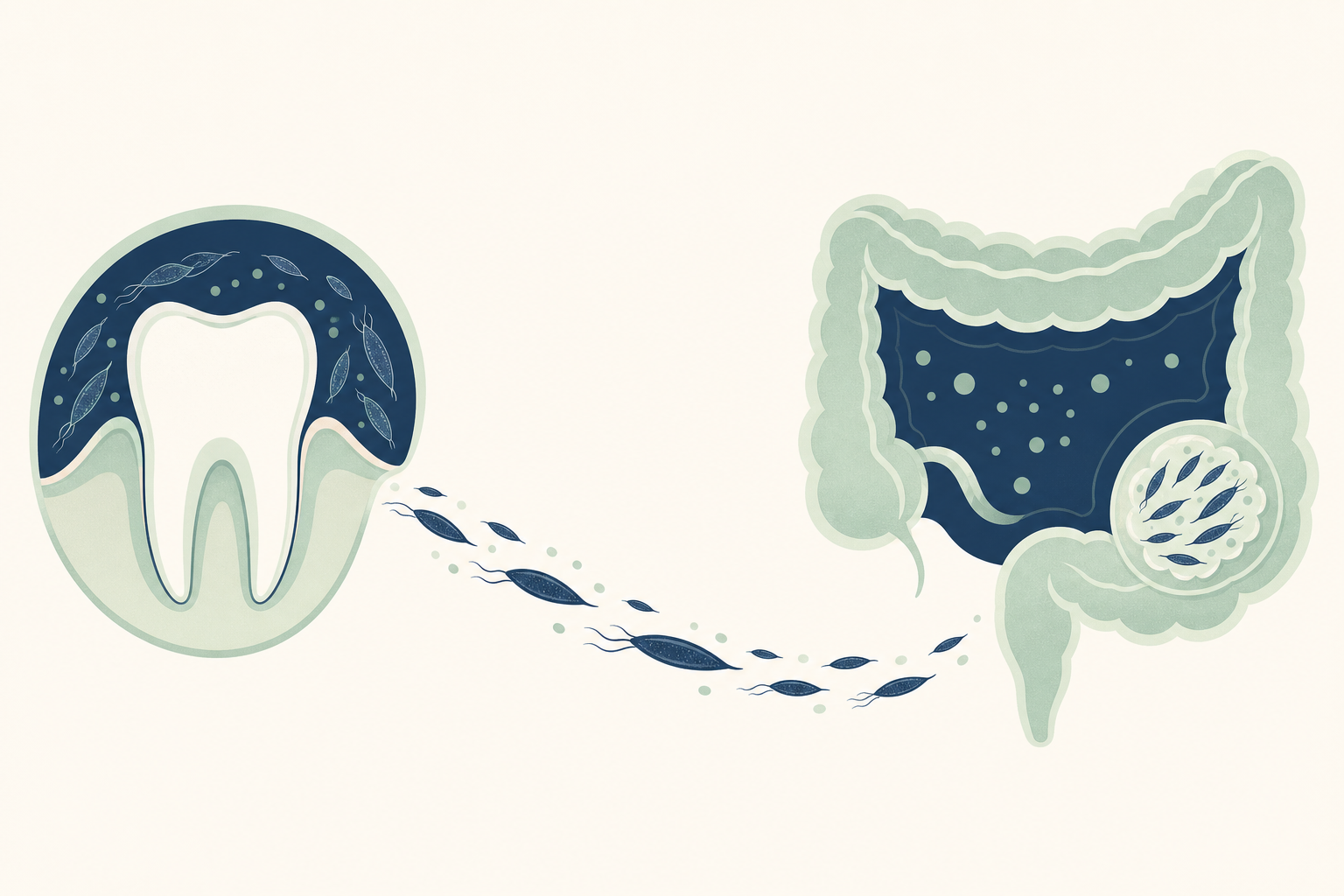
8-slide carousel · storyboard copy
A mouth bacterium found in colon tumours
Fusobacterium nucleatum is an anaerobic, Gram-negative bacterium found in dental plaque, especially below the gumline. Some strains have also been identified in colorectal tumour tissue.
- The mouth is a possible source, not proof of cause.
- This research does not mean that having gum disease causes colorectal cancer.
- There is currently no routine dental test that screens for colorectal cancer.
Why the finding matters
Researchers have compared bacterial DNA from saliva and colorectal tumours. In some patients, genomic fingerprints were closely matched, supporting movement from the oral cavity through the gastrointestinal tract or bloodstream. A distinct clade, called F. nucleatum animalis C2, is enriched in colorectal tumour samples.
- F. nucleatum is uncommon in the lower bowel of healthy people but enriched in some colorectal tumours.
- The bacterium can bind tumour-associated sugars through its Fap2 protein.
- FadA and other bacterial interactions may affect epithelial signalling, inflammation and immune-cell activity.
- Association and biological plausibility are not the same as proof that the bacterium initiated the tumour.
What the research protocol actually involves
The scientific pathway is laboratory-based, not a dental appointment. Researchers collect saliva, plaque, stool or tumour tissue, extract DNA, sequence bacterial regions or whole genomes, and compare strain-level markers. Tumour tissue is obtained during colonoscopy with biopsy or during surgery, then examined by pathology and molecular testing.
- Oral sample: saliva or plaque from the mouth, often including subgingival plaque.
- Colorectal sample: biopsy or resection tissue from the colon or rectum.
- Laboratory method: PCR, metagenomic sequencing or targeted genomic analysis.
- Clinical interpretation: a positive bacterial signal cannot diagnose cancer without validated colorectal screening and medical assessment.
The one rule that matters now
Do not replace established colorectal screening with a saliva test or a dental procedure. If screening is due, use the pathway offered by your physician or local programme, such as a stool-based test or colonoscopy. An abnormal stool test generally needs medical follow-up, often including colonoscopy.
- Dental cleaning supports gum health, but it has not been proven to prevent colorectal cancer.
- Brush twice daily with fluoride toothpaste, clean between teeth, and spit rather than rinse after brushing.
- Interdental brushes are preferable where the gap allows; floss remains useful where a brush cannot fit.
Mythbuster: “A dental plaque bacterium means I have cancer”
False. F. nucleatum can be present in oral biofilm and periodontal disease without indicating colorectal cancer. Tumour studies identify enrichment in particular cancers and strains, but an oral swab cannot currently confirm or exclude a colorectal tumour.
- Myth: bleeding gums diagnose bowel cancer. Fact: gum bleeding usually needs a dental and periodontal assessment.
- Myth: antibiotics or mouthwash can prevent colorectal cancer. Fact: no such prevention protocol is established.
- Myth: a clean mouth removes colorectal cancer risk. Fact: oral hygiene is important, but cancer risk also involves age, family history, inflammatory bowel disease, genetics and other factors.
Make it yours: know your route to screening
Ask your family doctor or gastroenterologist when colorectal screening is appropriate for you. The timing and test depend on age, symptoms, family history, previous polyps, inflammatory bowel disease and inherited cancer syndromes. Follow the UAE service or health system used for your care.
- Do not wait for a dental visit if you have blood in the stool, black stools, persistent change in bowel habit, unexplained iron-deficiency anaemia, ongoing abdominal pain or unintentional weight loss.
- Tell the clinician if a parent, sibling or child had colorectal cancer or advanced polyps.
- Keep dental appointments for examination of the gums, teeth, restorations and oral biofilm.
When to see a dentist
See a dentist for gum bleeding, swelling, pus, persistent bad breath, loose teeth, painful chewing or a tooth that does not settle. The clinical steps may include periodontal probing around each tooth, dental radiographs when indicated, removal of calculus with ultrasonic or hand instruments, polishing, and a home-care plan. These steps treat oral disease. They are not colorectal cancer screening.
- A dentist can assess plaque, calculus, periodontal pockets, tooth decay and oral lesions.
- A physician or gastroenterologist assesses bowel symptoms and colorectal screening.
- Tell both clinicians about relevant medicines, diabetes, smoking and previous diagnoses.
The evidence is promising, but the test is not here yet
Strain-level genomics strengthens the case that selected oral F. nucleatum strains can reach colorectal tumours and may influence the tumour environment. Researchers still need validated tests, prospective studies and proof that changing the oral bacterium changes cancer outcomes. Until then, protect oral health and complete established colorectal screening when it is due.
- Book a dental examination if your gums bleed or your teeth feel loose.
- Contact a medical clinician for bowel symptoms or screening advice.
- Do not use a saliva result, mouthwash or dental cleaning as a substitute for colorectal screening.