GLP-1 agonists and the dental patient: sedation risk, dry mouth, and the gaps in the oral-health data
Semaglutide is changing patient physiology faster than dentistry's evidence base. Here is what is known, what to do, and what remains uncertain.
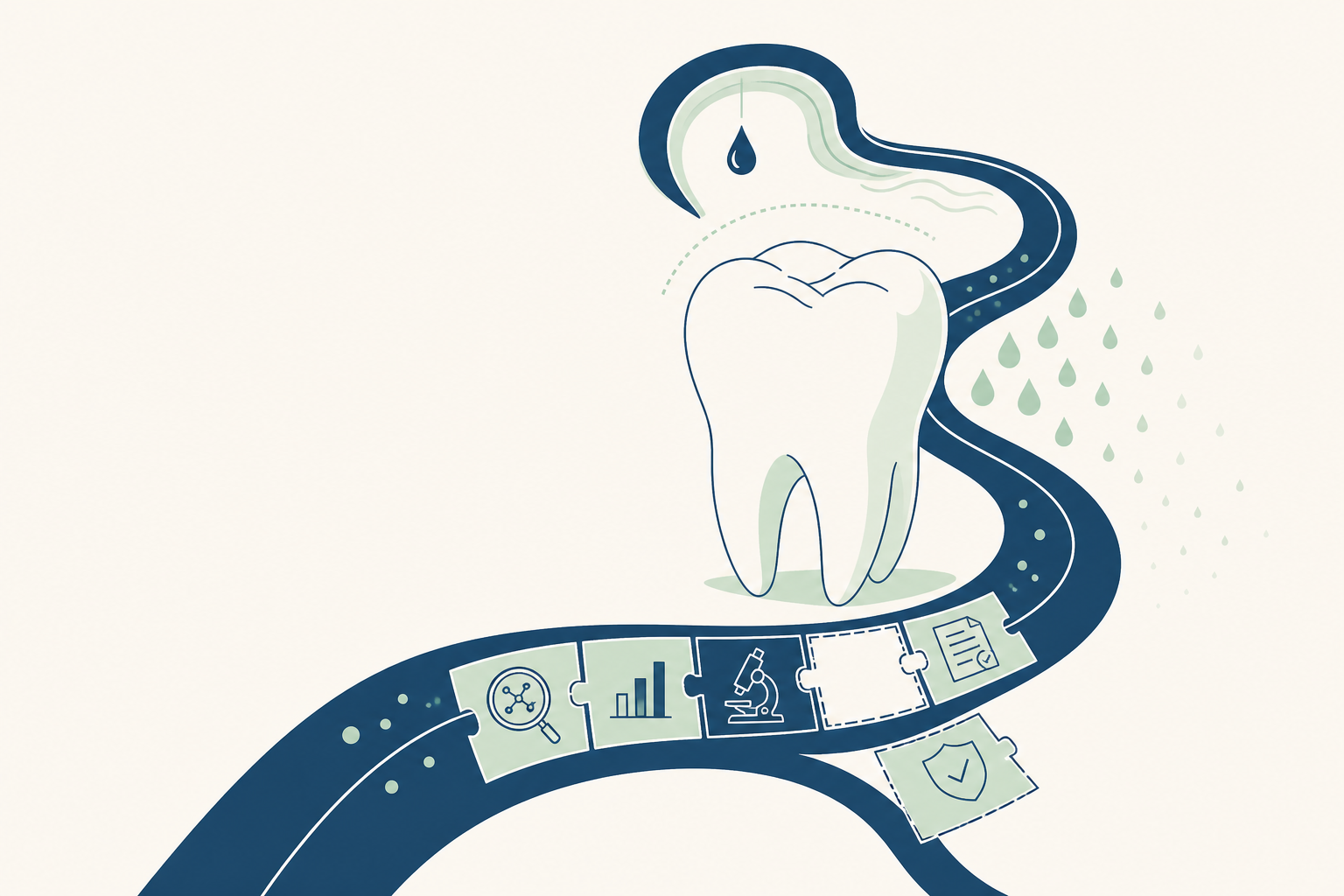
8-slide carousel · storyboard copy
Taking semaglutide or another GLP-1 medicine?
Tell your dentist before treatment, especially if sedation, fasting, surgery, or treatment for vomiting and reflux is planned.
- Examples include semaglutide, liraglutide, dulaglutide, tirzepatide and similar medicines.
- The oral-health evidence is still developing.
Why it matters in the dental chair
GLP-1 medicines can slow gastric emptying and reduce appetite. If stomach contents remain during deep sedation or general anaesthesia, they may travel from the stomach into the pharynx and then the trachea or lungs. This is pulmonary aspiration risk. Some patients also report nausea, vomiting, reflux, dry mouth, altered taste and bad breath.
- The risk depends on the medicine, dose escalation, symptoms, diabetes control, other medicines, the procedure and the depth of sedation.
- Dry mouth reduces saliva's buffering, lubricating and antimicrobial effects, increasing risk of caries, mucosal soreness and oral thrush.
- A direct causal link between GLP-1 medicines and dental decay or gum disease has not been established.
The practical protocol
Use this sequence before a dental appointment.
- 1. List the exact medicine, dose, injection or tablet schedule, reason for use, last dose and recent dose changes.
- 2. Report nausea, vomiting, retching, reflux, bloating, constipation, abdominal fullness or difficulty eating. These symptoms matter for aspiration assessment.
- 3. Ask whether treatment needs only local anaesthetic, minimal sedation, inhaled nitrous oxide, oral sedation, intravenous sedation or general anaesthesia. These are not interchangeable.
- 4. For deep sedation or general anaesthesia, the dentist and anaesthesia team should set the fasting plan and decide whether to delay treatment or modify the airway and sedation plan. Do not stop or skip a GLP-1 medicine without the prescriber and anaesthesia team agreeing, because glucose control and other risks must be managed.
- 5. If vomiting reaches the mouth, rinse with water, wait before brushing, and use a fluoride toothpaste later. Repeated acid exposure can soften enamel.
One rule that protects teeth
Brush twice daily with fluoride toothpaste, spit out the excess, and do not rinse with water immediately afterward.
- Use a soft toothbrush and clean the gumline, tongue-side surfaces and chewing grooves.
- Clean between teeth daily. An interdental brush is preferable where it fits without force. Floss remains useful where a brush cannot enter.
- For persistent dry mouth, ask a dentist or pharmacist about saliva substitutes, sugar-free gum or lozenges, and a tailored fluoride plan.
Mythbuster: the medicine is not a dental diagnosis
Dry mouth, nausea or altered taste after starting a GLP-1 medicine may be related to the treatment, dehydration, reduced food intake, mouth breathing, reflux or another medicine. Symptoms alone do not prove the cause.
- Do not replace fluoride toothpaste with hydroxyapatite and assume they are equivalent.
- Do not use mouth taping to treat dry mouth or mouth breathing.
- Charcoal whitening is not established as a safe, effective whitening treatment and may be abrasive.
- Alcohol-free mouthwash can be more comfortable for dry mouth, but it does not replace brushing or interdental cleaning.
Make the plan fit your mouth
Your risk changes with your symptoms and your baseline oral condition.
- If saliva feels reduced, sip water regularly, choose sugar-free gum containing xylitol if appropriate, and limit frequent sugary drinks or acidic drinks.
- If you have diabetes, keep glucose management coordinated with your medical team. High glucose can increase oral dryness and infection risk.
- If you have reflux or vomiting, request an examination for palatal or smooth-surface enamel erosion, dentine sensitivity and caries at the gumline.
- If you use dentures, remove and clean them as directed, and tell the dentist about soreness, cracking at the corners of the mouth or white patches.
When to contact a dentist or doctor
Arrange dental assessment for new sensitivity, toothache, bleeding or swollen gums, persistent bad breath, mouth ulcers, burning, white patches, difficulty swallowing, or repeated vomiting-related erosion.
- Contact the prescribing clinician urgently for severe or persistent vomiting, inability to keep fluids down, severe abdominal pain, faintness or signs of dehydration.
- Before sedation, give the dental and anaesthesia teams the complete medication and symptom history. The correct decision may be local anaesthetic alone, a different sedation plan, or postponement.
- Do not conceal the medicine because the appointment is routine.
Bring the medication list to your next dental visit
GLP-1 treatment does not automatically prevent dental care. The safe plan is medication disclosure, symptom screening, appropriate fasting and sedation decisions, fluoride protection, and early management of dry mouth or acid exposure.
- Save the name, dose, last dose and recent side effects in your phone.
- Ask the clinic to confirm the sedation and fasting instructions before the appointment.
- Dental Nation can help assess the teeth, gums, saliva, enamel and treatment risks as part of an individual plan.