Silver diamine fluoride for caries arrest: efficacy is settled, so why is uptake the real question
SDF can stop active decay, but staining, review intervals, and child acceptance determine whether it is used.
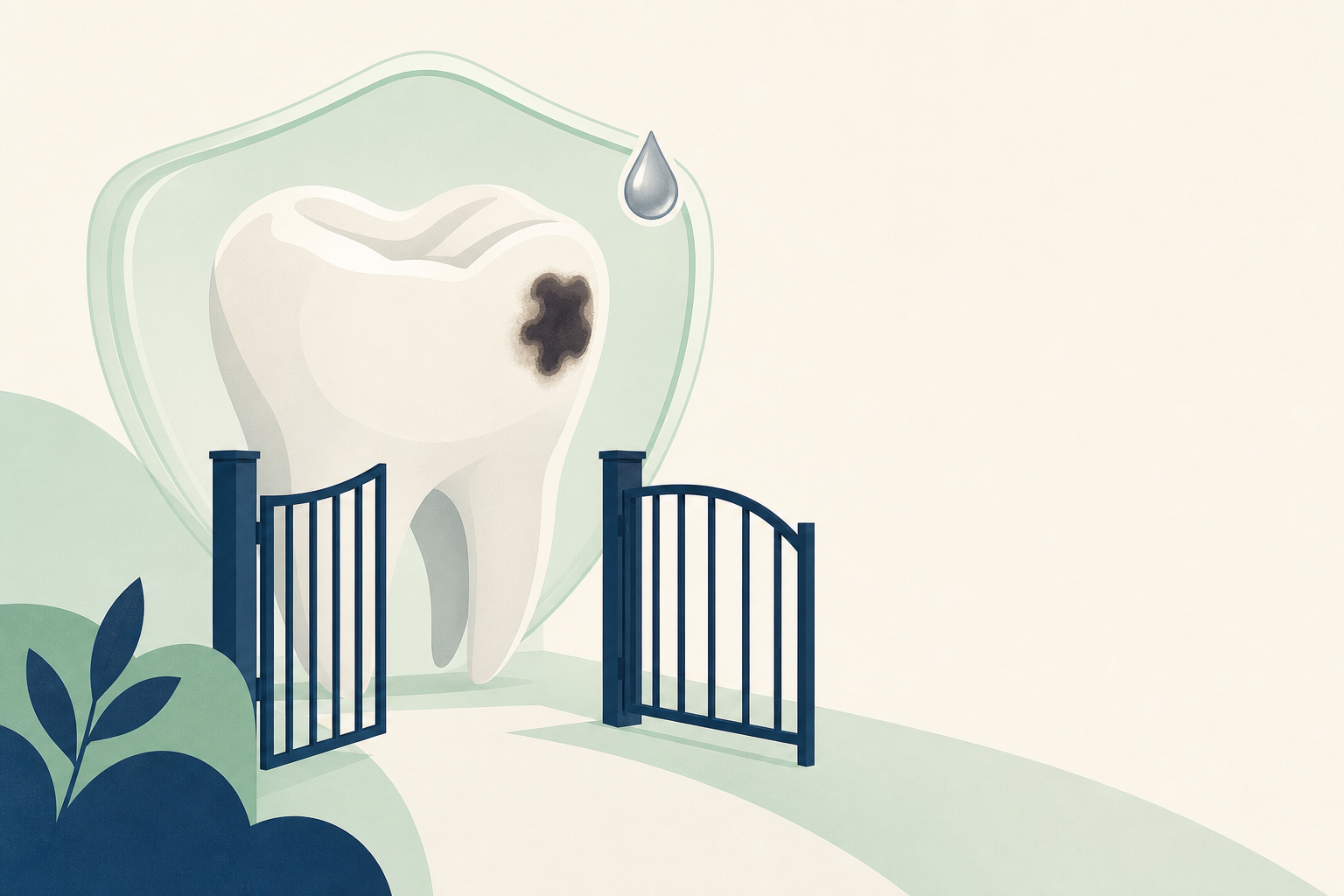
8-slide carousel · storyboard copy
SDF can stop active decay
Silver diamine fluoride is a liquid treatment for active tooth decay. It can arrest disease without drilling in selected cases, but it permanently darkens the decayed tooth structure.
- Most often used for primary teeth, root caries, and patients who cannot tolerate conventional treatment
- It does not rebuild missing enamel or replace a filling
- The decision depends on disease activity, tooth anatomy, appearance, cooperation, and follow-up
Why the material works
A commonly used SDF formulation contains 38% silver diamine fluoride. Silver ions damage bacterial cell membranes and interfere with bacterial enzymes. Fluoride helps convert softened mineral into more acid-resistant fluoridated mineral within enamel and dentine. The arrested lesion becomes hard, while the stained organic dentine turns black.
- Enamel is the hard outer layer; dentine lies beneath it and contains dentinal tubules
- SDF is most useful when decay is accessible and the tooth can be kept clean
- It cannot reliably arrest decay hidden beneath an intact enamel surface or seal a leaking restoration
The clinical protocol
The dentist examines the tooth, checks whether the lesion is active, and assesses the pulp, bite, cleansability, and restorability. The tooth is cleaned, isolated, and dried. Soft tissues are protected because SDF can irritate them. A small amount is placed with a microbrush on the decayed enamel or dentine, usually for about one minute, then excess is blotted. The tooth is reviewed and the application is repeated when indicated.
- A rubber dam, cotton rolls, petroleum jelly, or another barrier may be used for tissue protection
- The dentist avoids unnecessary contact with lips, cheeks, and gingiva
- Follow-up is commonly planned at about 6 to 12 months, and sooner when disease risk or lesion activity is high
- A restoration or stainless steel crown may still be needed if structure is weak, food traps persist, or the pulp is involved
The rule that matters: keep the surface clean
SDF arrests decay, but plaque can reactivate disease around the same tooth. Brush twice daily with fluoride toothpaste, spit after brushing, and do not rinse with water. Clean between teeth with an interdental brush where the gap allows. Floss remains appropriate where an interdental brush does not fit.
- For children, an adult should place the correct amount of fluoride toothpaste and supervise brushing
- Reduce frequent sugary drinks and snacks, especially between meals
- Do not scrape or polish the black area away, because the colour is within the arrested decayed tissue
Mythbuster: black does not mean treatment failure
The black colour is an expected chemical change in the carious enamel or dentine. A successful arrested lesion should feel hard when assessed by the dentist. SDF is not a cosmetic whitening treatment, and it does not make a missing tooth surface look normal.
- Healthy enamel next to the lesion does not usually turn black
- A tooth that becomes painful, swollen, loose without normal exfoliation, or develops a gum boil needs assessment
- A white crown, composite restoration, or other conventional option may be preferable when appearance is a priority
Make the choice fit the patient
SDF is often practical for a young child with several accessible cavities, a patient who cannot manage drilling, or root caries in an older adult. It may be a poor fit when the lesion is hidden, the tooth is not restorable, the pulp is infected, or the patient cannot accept permanent dark staining.
- For a front primary tooth, discuss the visible result before treatment
- For a back tooth, consider whether the lesion can be cleaned and whether chewing forces require coverage
- For a child, explain the procedure as a short painting step and agree how future reviews will happen
- Re-application is part of disease control, not proof that the first application was useless
When to see a dentist
Arrange an examination when you see a hole, a soft or brown area, food packing, sensitivity, or a dark mark that is changing. Seek prompt care for spontaneous toothache, pain that lingers after hot or cold, facial swelling, fever, a gum boil, or difficulty opening the mouth or swallowing.
- The dentist must determine whether decay is limited to enamel and dentine or has reached the pulp chamber
- SDF is not appropriate for every cavity, and pain relief alone does not treat the cause
- Ask which surface will be treated, how staining will look, and when the tooth will be reviewed
The answer is not only whether SDF works
SDF is a scientifically established way to arrest selected active caries. Uptake depends on accepting the black stain, maintaining plaque control, and returning for review or restoration when needed. If those conditions fit the patient, SDF can be a simple, conservative part of caries management.
- Save this carousel for your next dental visit
- Discuss SDF alongside fluoride varnish, sealants, restorations, or crowns when appropriate
- Dental Nation can assess whether SDF fits the tooth, the patient, and the treatment goal