Periodontitis and cardiovascular disease: from association to the interventional trials
What is causal, what may be confounded, and what periodontal treatment can actually change
8-slide carousel · storyboard copy
Gum inflammation is not the same as a heart attack risk factor
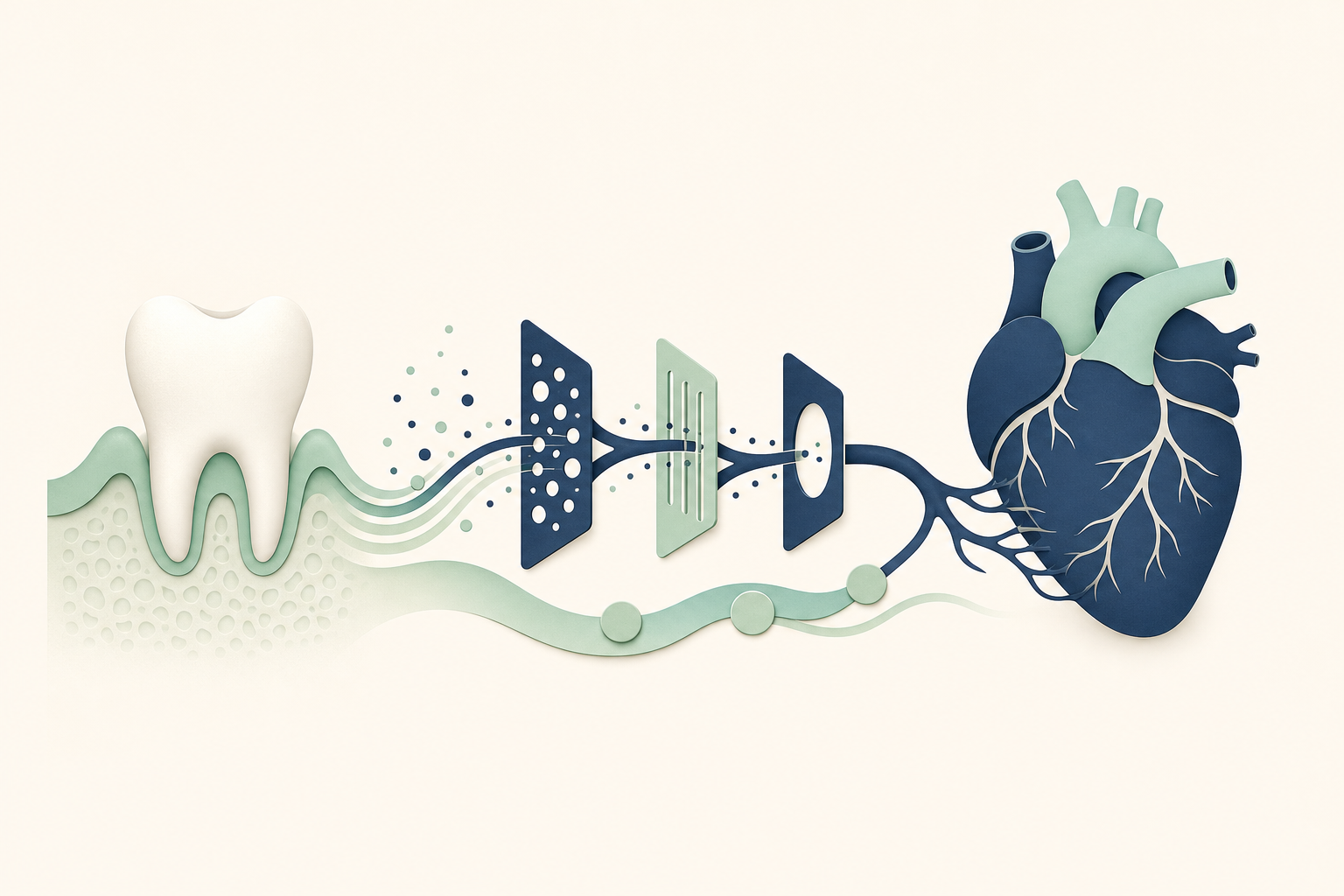
Periodontitis is a bacterial inflammatory disease of the tissues supporting teeth. It is associated with cardiovascular disease, but association does not prove that periodontitis causes heart attacks or strokes.
- The question is being tested with genetics and treatment trials.
- The most reliable benefit of periodontal therapy is control of gum infection and inflammation.
Why the mouth and arteries are studied together
In periodontitis, plaque bacteria and inflammatory cells affect the gingiva, periodontal ligament, cementum and alveolar bone. Bleeding tissues can allow bacterial products and inflammatory mediators to enter the bloodstream. This creates a biologically plausible link with vascular inflammation, but smoking, diabetes, obesity, age and socioeconomic factors can affect both conditions.
- Atherosclerosis involves fatty and fibrous plaque within arterial walls.
- Periodontitis involves loss of attachment between tooth and alveolar bone.
- Shared risk factors can make an association look stronger than a direct cause.
What the intervention studies actually test
A periodontal trial usually starts with examination of six sites around each tooth, a periodontal probe, bleeding assessment, radiographs when indicated, and measurement of pocket depth and attachment loss.
- Remove supragingival plaque and calculus with a toothbrush, interdental cleaning and professional instrumentation.
- Perform subgingival debridement with ultrasonic instruments and hand curettes to disrupt biofilm and remove calculus from root surfaces.
- Reassess bleeding, pocket depths and plaque control after healing.
- Use periodontal surgery, extraction of a hopeless tooth, or specialist treatment only when anatomy and disease severity require it.
- Track vascular markers or cardiovascular events separately. A change in gum bleeding is not automatically proof of fewer heart attacks.
The rule that matters: treat periodontitis, but do not call it heart prevention
Periodontal treatment is indicated to preserve teeth, reduce bleeding, control infection and limit further destruction of periodontal attachment and alveolar bone. Current evidence does not justify replacing statins, blood-pressure treatment, diabetes care, smoking cessation or prescribed cardiovascular medicines with gum treatment.
- Brush twice daily with fluoride toothpaste, then spit without rinsing.
- Clean between teeth daily. Interdental brushes are preferable where the space allows; floss remains useful where a brush cannot fit.
- Do not stop cardiovascular medicines before dental treatment without the prescribing clinician.
Mythbuster: genetics can test causality, but they are not a final verdict
Mendelian-randomisation studies use inherited genetic variants linked with periodontitis to ask whether a genetically predicted exposure is associated with cardiovascular disease. This can reduce some confounding, but results depend on the quality of the genetic instruments and assumptions such as no pleiotropy.
- An observational association can reflect shared causes or reverse causation.
- A genetic signal can support or weaken a causal hypothesis, but it does not reproduce periodontal treatment.
- Treatment trials are needed to test whether changing gum disease changes cardiovascular outcomes.
Make the evidence relevant to your mouth
Risk is not identical for every patient. A person with deep bleeding pockets, smoking exposure, diabetes or previous tooth loss may need a more intensive periodontal plan than someone with gingivitis and intact attachment.
- Ask whether the diagnosis is gingivitis or periodontitis.
- Ask for pocket depths, bleeding sites, attachment loss and bone changes on radiographs when relevant.
- Tell the dental team about diabetes, smoking, pregnancy, anticoagulants and cardiovascular disease.
- Follow the maintenance interval based on recurrent bleeding, plaque control, pocket anatomy and risk factors.
When to see a dentist
Arrange a dental assessment for bleeding that persists, swollen or tender gums, bad taste or odour, gum recession, loose teeth, drifting teeth, or pain when chewing. Urgent care is needed for facial swelling, fever, difficulty swallowing or difficulty breathing.
- A dentist can distinguish gingival inflammation from periodontal attachment loss.
- Treatment may include professional debridement, local anaesthetic, behavioural instruction, referral to a periodontist, or removal of a tooth that cannot be maintained.
- A cardiovascular history helps the dental team plan safely, but it does not change the need to control the periodontal infection.
The answer in one sentence
Periodontitis and cardiovascular disease share plausible biology and observed associations, while genetic and treatment studies continue to test causality. Treat periodontitis for oral health and possible systemic benefit, but continue evidence-based cardiovascular prevention.
- Book a periodontal examination if your gums bleed or your teeth feel loose.
- Bring your medication list and medical history.
- Dental Nation can help assess the cause and map the next clinical step.