Peri-implantitis treatment: reconstructive, resective, or just decontamination
What current evidence says about surgery, non-surgical care, and long-term expectations
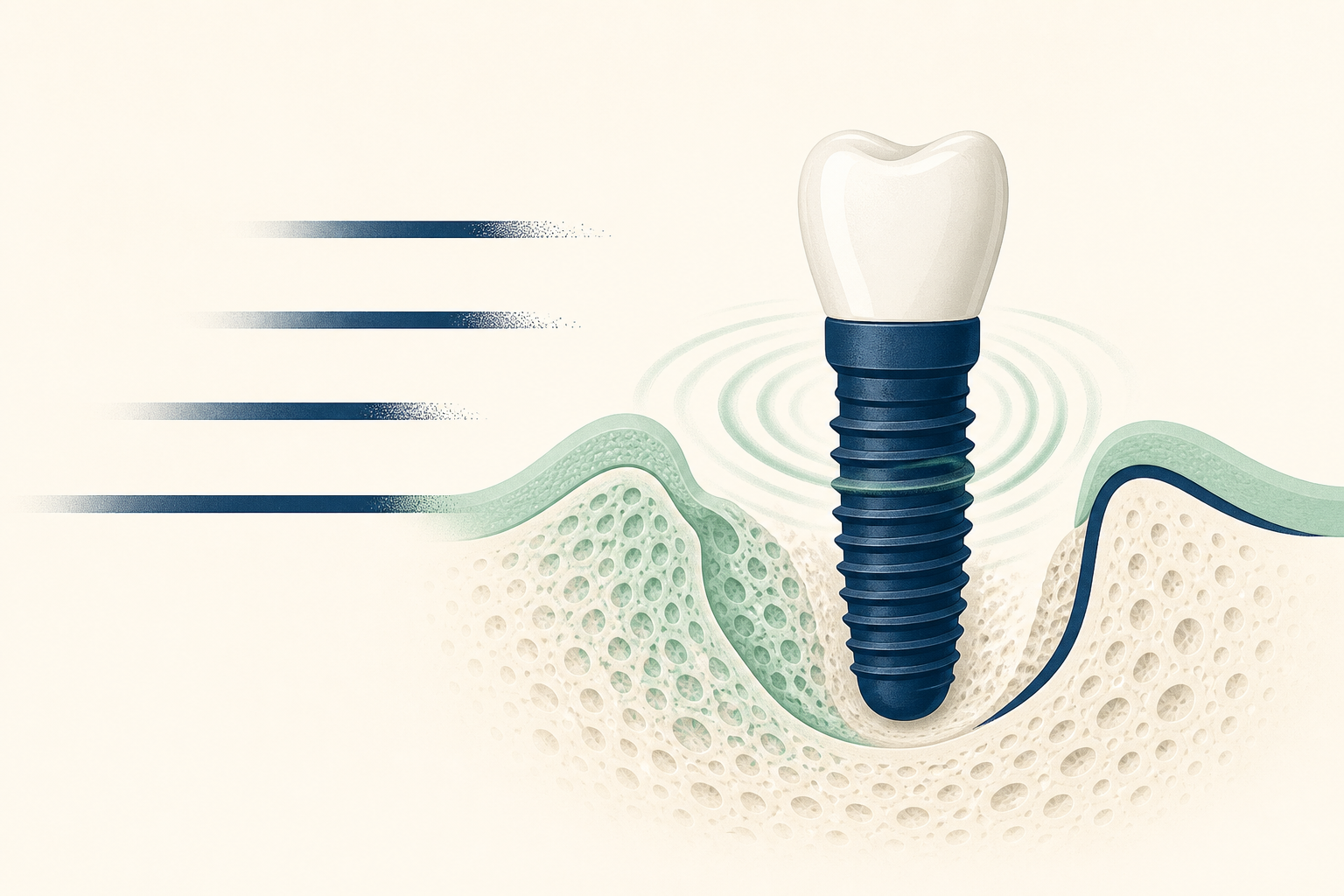
8-slide carousel · storyboard copy
Peri-implantitis is an infection around an implant
Inflamed tissue can destroy the bone supporting a dental implant. Treatment aims to stop inflammation, clean the implant surface, and control the causes that allow plaque to return.
Why treatment choice matters
The defect may be shallow or deep, contained within the bone or exposed on several sides. Its shape, implant position, surface, remaining bone, bite forces, smoking, diabetes control, and daily plaque removal all affect the plan.
- Non-surgical treatment can reduce inflammation but often cannot fully reach rough implant threads inside a deep defect.
- Resective surgery exposes the contaminated surface, removes inflamed tissue, and may reshape bone around an implant that cannot be cleaned in its original position.
- Reconstructive surgery attempts to rebuild a contained bone defect with a barrier membrane and bone-graft material after decontamination.
The treatment protocol, step by step
A predictable plan starts with diagnosis and risk control, not with a graft or laser.
- Record probing depths, bleeding or suppuration, recession, mobility, bite contacts, radiographs, implant position, and the amount and shape of bone loss.
- Improve plaque control with an implant-safe toothbrush, interdental brushes where the gap allows, or floss where it does not. Address smoking, poorly controlled diabetes, excess cement, and removable prosthesis hygiene.
- Remove the crown or access it when needed. Lift a full-thickness gum flap to see the defect, remove granulation tissue, and mechanically clean the titanium surface with instruments designed for implants, such as titanium curettes or specific air-polishing powders.
- Use adjunctive chemical or physical decontamination only when appropriate. Chlorhexidine, saline, citric acid, lasers, and photodynamic methods have not consistently replaced thorough mechanical debridement.
- Choose resective treatment when the implant threads remain exposed or the defect is not suitable for rebuilding. Choose reconstruction only when a stable, sufficiently contained defect and a cleansable implant position are present. Materials may include particulate xenograft or alloplast, sometimes with a resorbable collagen membrane.
- Reposition and suture the tissue, provide analgesia and oral-hygiene instructions, review healing, and maintain the implant with professional monitoring and home plaque control.
The one rule that matters
A cleaned implant is not cured if plaque returns. The long-term result depends on a cleansable crown contour, controlled inflammation, and maintenance visits. Brush twice daily with fluoride toothpaste, then spit and do not rinse. Clean between implants daily.
- Interdental brushes are preferable to floss when the space permits gentle access without forcing the brush.
- Floss remains useful where a brush cannot pass, especially beneath contacts and around prosthetic contours.
- Do not use a brush or metal instrument forcefully against the gum or implant surface.
Mythbuster: decontamination alone is not the same as regeneration
Cleaning the implant surface is necessary in every approach, but decontamination alone does not rebuild lost bone. Non-surgical care is most useful for mucositis, early disease, shallow defects, or preparation before surgery. Established peri-implantitis with deep bleeding sites and radiographic bone loss often needs surgical access.
- Reconstructive surgery is not a guarantee of bone re-growth or implant retention.
- Resective surgery may make the implant easier to clean, but it can expose metal threads and may affect appearance.
- Antibiotics, lasers, air polishing, and grafts are adjuncts. None removes the need for diagnosis, mechanical cleaning, and maintenance.
Make the decision fit the defect
The practical answer is anatomy first. A deep, narrow, mainly vertical defect with intact walls is more favourable for reconstruction. A broad, horizontal defect, exposed threads, poor implant position, or a crown that cannot be cleaned favours resection, prosthetic redesign, or implant removal.
- If the implant is mobile, the supporting bone has failed extensively and removal is usually considered.
- If the implant is stable but inflamed, treatment may combine prosthesis modification, debridement, resective surgery, or reconstruction.
- If cement is trapped below the gum, remove it and correct the restoration. If excess loading is present, adjust the bite and evaluate the prosthesis.
- The least invasive option that can reach the contaminated surface and create a maintainable result is usually the soundest choice.
When to see a dentist
Arrange an implant assessment for bleeding when cleaning, pus, swelling, bad taste, increasing spacing, gum recession, pain, or a loose crown. Urgent review is needed for facial swelling, fever, difficulty swallowing, or an implant that moves.
- A clinician should compare current and previous radiographs because bone loss over time is more informative than one isolated image.
- Ask for the defect shape, implant stability, implant position, proposed cleaning method, material if grafting is planned, and the maintenance schedule.
- Do not wait for pain. Peri-implantitis can progress while symptoms remain mild.
The bottom line
Reconstructive surgery can restore selected contained bone defects. Resective surgery can expose and reshape an implant so it becomes cleanable. Decontamination is essential but rarely solves advanced disease by itself. Because many studies have short follow-up and differing definitions of success, a stable result means controlled inflammation, a maintainable restoration, and regular review over time.
- Book a Dental Nation implant assessment if you have bleeding, suppuration, gum recession, or radiographic bone loss around an implant.
- Bring any previous implant records and radiographs so bone changes can be compared.