Is Bleeding When I Brush Normal?
Short answer: no. It is often an early, reversible sign of gum disease.
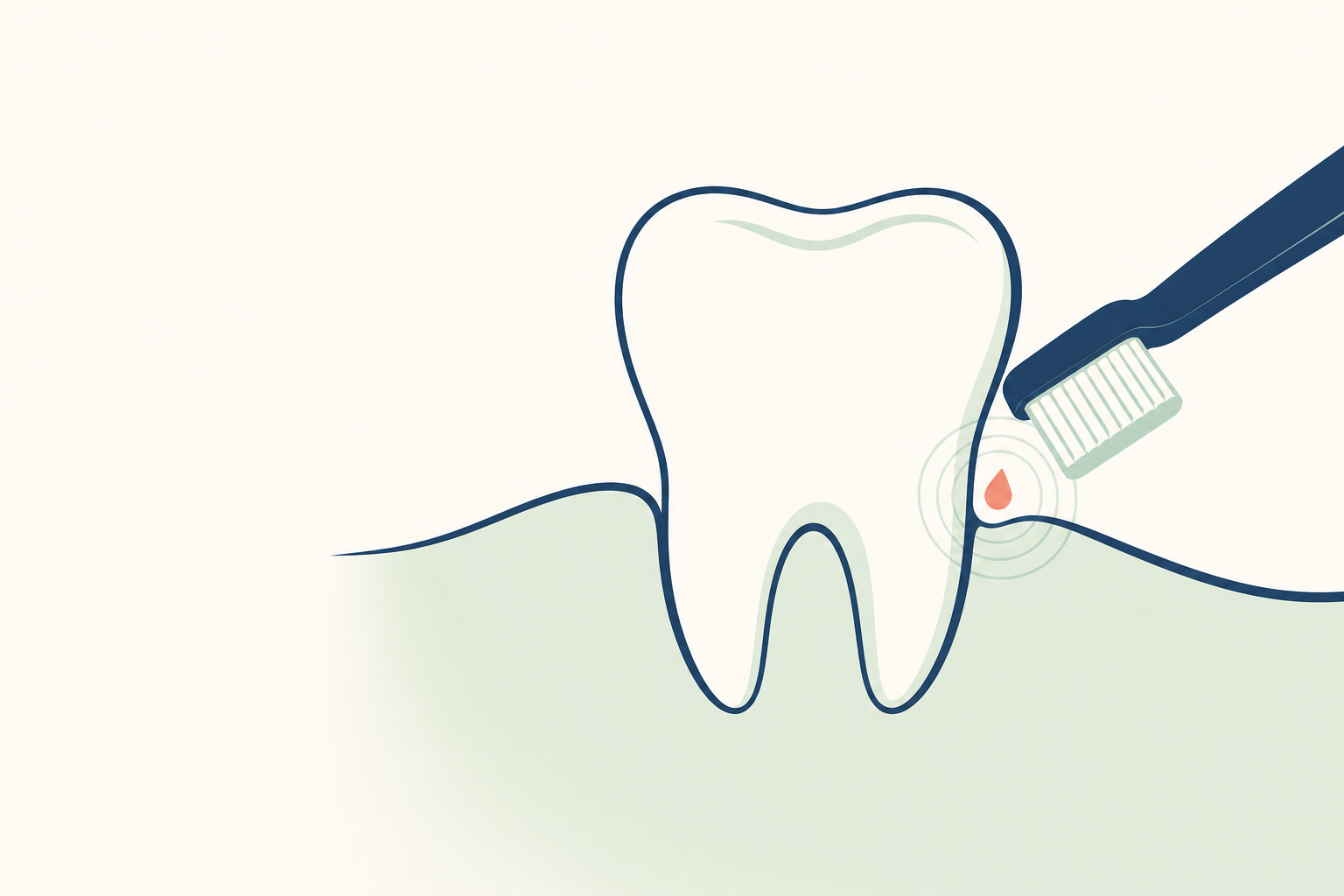
8-slide carousel · storyboard copy
Bleeding is a signal, not a normal brushing result
Healthy gums should not regularly bleed when you brush or clean between your teeth. Bleeding usually means inflammation where plaque meets the gumline. The earlier you act, the easier it is to reverse.
Plaque irritates the gum tissue
Dental plaque is a sticky film of bacteria. If it remains around the gumline, your immune system responds with inflammation. The gum becomes red, swollen, tender, and more likely to bleed. Hardened plaque, called calculus or tartar, cannot be brushed away at home.
- This early stage is called gingivitis.
- Untreated inflammation can affect the tissues and bone supporting teeth.
Use this simple daily protocol
Brush twice daily with a soft-bristled toothbrush and fluoride toothpaste, angling the bristles toward the gumline. Clean between teeth every day with an interdental brush where the gap allows, or floss where it does not. Use gentle pressure and clean every tooth surface.
- Brush for about two minutes.
- Spit after brushing. Do not rinse with water.
- Do not stop cleaning because a little bleeding appears.
The one rule: clean the gumline consistently
Bleeding often continues when inflamed gums are left untouched. Gentle, consistent plaque removal gives the tissue a chance to settle. Avoid scrubbing harder, which can injure the gum edge. If bleeding does not improve with careful daily cleaning, arrange a dental assessment.
- A hygienist can remove calculus safely.
- Smoking can hide bleeding while increasing gum disease risk.
Myth: bleeding means you should avoid brushing
Not usually. Avoiding the area leaves plaque in place and allows inflammation to continue. Brush gently and clean between the teeth. Bleeding can also have other causes, including trauma, pregnancy-related gum changes, medicines, or a bleeding condition, so persistent or unusual bleeding needs professional advice.
- Do not self-treat with harsh products.
- Tell your dentist about medicines and medical conditions.
Make the routine fit your mouth
Choose the tool that reaches your spaces without forcing it. Interdental brushes are often preferable where they fit comfortably, while floss is useful for tight contacts. If your gums are crowded, braces are present, or spaces vary, a dentist or hygienist can demonstrate the right size and technique.
- Replace a worn toothbrush head.
- Clean around crowns, bridges, implants, and orthodontic wires.
Know when reassurance is not enough
Book a dentist if your gums bleed repeatedly, or if you notice swelling, soreness, persistent bad breath, pus, gum recession, loose teeth, or changes in how teeth meet. Seek urgent dental care for very painful swelling, a spreading infection, or a loose tooth. Your dentist can measure gum pockets and check supporting bone.
- Pregnancy and diabetes increase the need for gum monitoring.
- A professional cleaning may be needed when calculus is present.
Bleeding is worth acting on
Bleeding when brushing is common, but it is not something to normalise. Start gentle daily plaque removal today and monitor the pattern. If it keeps happening, let a Dental Nation dentist examine the cause, protect the supporting tissues, and guide you back to healthy gums.
- Save this for your next brushing routine.
- Book an assessment if bleeding persists.