Your Mouth and Your Heart: What the Latest Research Really Shows
The link between gum health and the rest of the body keeps getting stronger in the evidence. We translate this year's findings carefully, without scaremongering.
8-slide carousel · storyboard copy
Your gums are part of your body
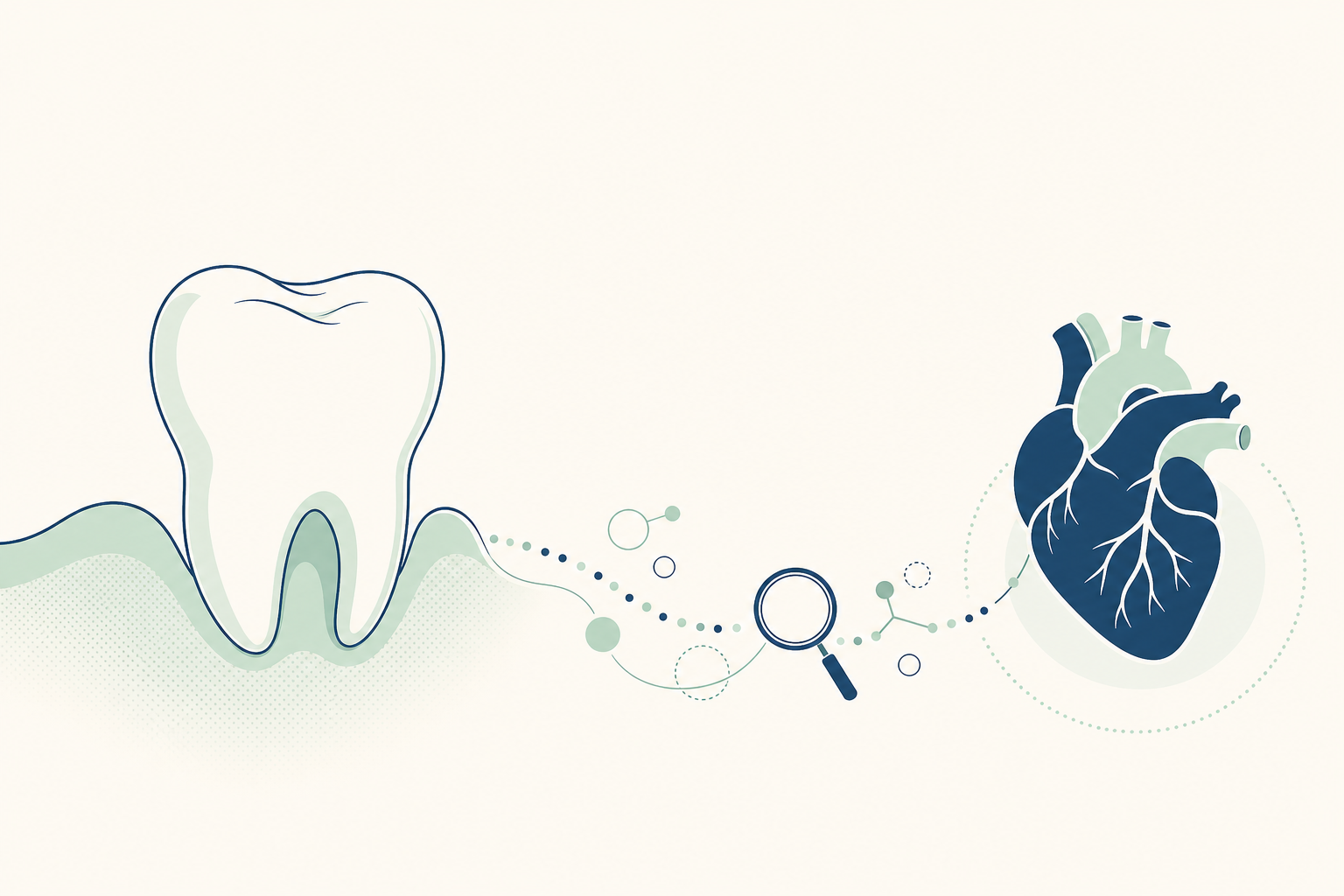
Gum disease begins in the tissues around the teeth, but inflammation can affect more than the mouth. The evidence links periodontal disease with cardiovascular disease, diabetes, pregnancy complications and other conditions. Most findings show association, not proof that gum disease directly causes these illnesses.
- The main disease is periodontitis, an infection-driven inflammation of the gum and supporting bone.
- The heart connection is biologically plausible, but brushing is not a substitute for blood-pressure, cholesterol or diabetes care.
Why the mouth and heart are studied together
Plaque bacteria collect at the gum margin and below it. If inflammation breaks the lining of a periodontal pocket, bacteria and inflammatory chemicals can enter the bloodstream, especially during chewing or brushing when gums bleed. Researchers are studying whether this contributes to blood-vessel inflammation or interacts with existing cardiovascular risk.
- Healthy gums usually do not bleed with gentle brushing.
- Periodontitis can destroy the periodontal ligament and alveolar bone that hold teeth in place.
- Smoking, diabetes, high blood pressure and high cholesterol can raise risk independently.
A practical gum-health protocol
Control plaque every day and remove hardened deposits professionally when needed.
- Brush twice daily for two minutes with a soft-bristled toothbrush and fluoride toothpaste. Angle the bristles toward the gum margin, using gentle pressure.
- Spit after brushing. Do not rinse with water immediately, so fluoride remains on the teeth.
- Clean between teeth daily. Use an interdental brush where the gap allows. Use floss where the contacts are tight, guiding it gently below the gum edge without snapping.
- Clean removable dentures or aligners as directed, and do not smoke or vape.
- Book an examination if bleeding persists, teeth feel loose, gums recede or bad breath continues despite cleaning.
The one rule that matters most
Bleeding is a sign to improve cleaning and arrange an assessment, not a reason to stop cleaning. Persistent bleeding can indicate gingivitis or periodontitis. A dental professional measures pocket depth, checks tooth mobility and examines the gum and bone support.
- Do not scrub harder. Excess pressure can injure the gum margin.
- A dental hygienist or dentist may remove calculus with ultrasonic or hand instruments.
- Periodontitis treatment may include subgingival cleaning, tailored home care and review of healing.
Mythbuster: gum disease does not mean a heart attack is inevitable
People with periodontitis often share risk factors with people who develop cardiovascular disease, including smoking, diabetes and age. Studies also report inflammatory and bacterial links. That does not prove that gum disease alone causes a heart attack, or that periodontal treatment prevents every cardiovascular event.
- Treat gum disease because it can cause tooth loss, pain, infection and impaired chewing.
- Continue prescribed medicines and medical monitoring for blood pressure, cholesterol, diabetes and heart symptoms.
- Do not replace fluoride toothpaste with hydroxyapatite and do not assume charcoal whitening is proven.
Make the plan fit your mouth
The best cleaning method depends on tooth spacing, gum shape, restorations and dexterity. A small interdental brush may suit open spaces, bridges or recession. Floss may suit tight contacts. Electric toothbrushes can help some people control plaque, but technique and consistency matter more than the brand.
- Tell the dental team if you have diabetes, smoke, are pregnant, take blood thinners or have heart disease.
- Ask for a brush size that enters the space with light resistance and does not force the gum.
- If you have implants, crowns, braces or dentures, request device-specific cleaning instructions.
When should you see a dentist?
Arrange a dental examination for bleeding that continues, swollen or tender gums, pus, gum recession, loose teeth, tooth sensitivity, persistent bad breath or a change in how teeth meet. Seek urgent care for facial swelling, fever, difficulty swallowing or difficulty breathing.
- The dentist may record bleeding sites, periodontal pocket depths, recession, mobility and plaque levels.
- Dental X-rays may assess bone loss when clinically indicated.
- Treatment is followed by review because periodontal disease can return if plaque control declines.
Protect your mouth, protect the evidence
Good gum care is valuable for your teeth and may reduce an inflammatory burden linked with wider health conditions. The clear answer is balanced: treat periodontitis, manage medical risk factors and use evidence-based prevention without fear-based claims.
- Brush with fluoride toothpaste, spit and do not rinse.
- Clean between teeth every day with the method that fits the space.
- Book a Dental Nation assessment if bleeding or other warning signs persist.