Regrowing the Gum You Thought Was Gone for Good
Receding gums used to be a one-way street. New tissue-regeneration techniques are changing that story, here is what is available now and what is still in the lab.
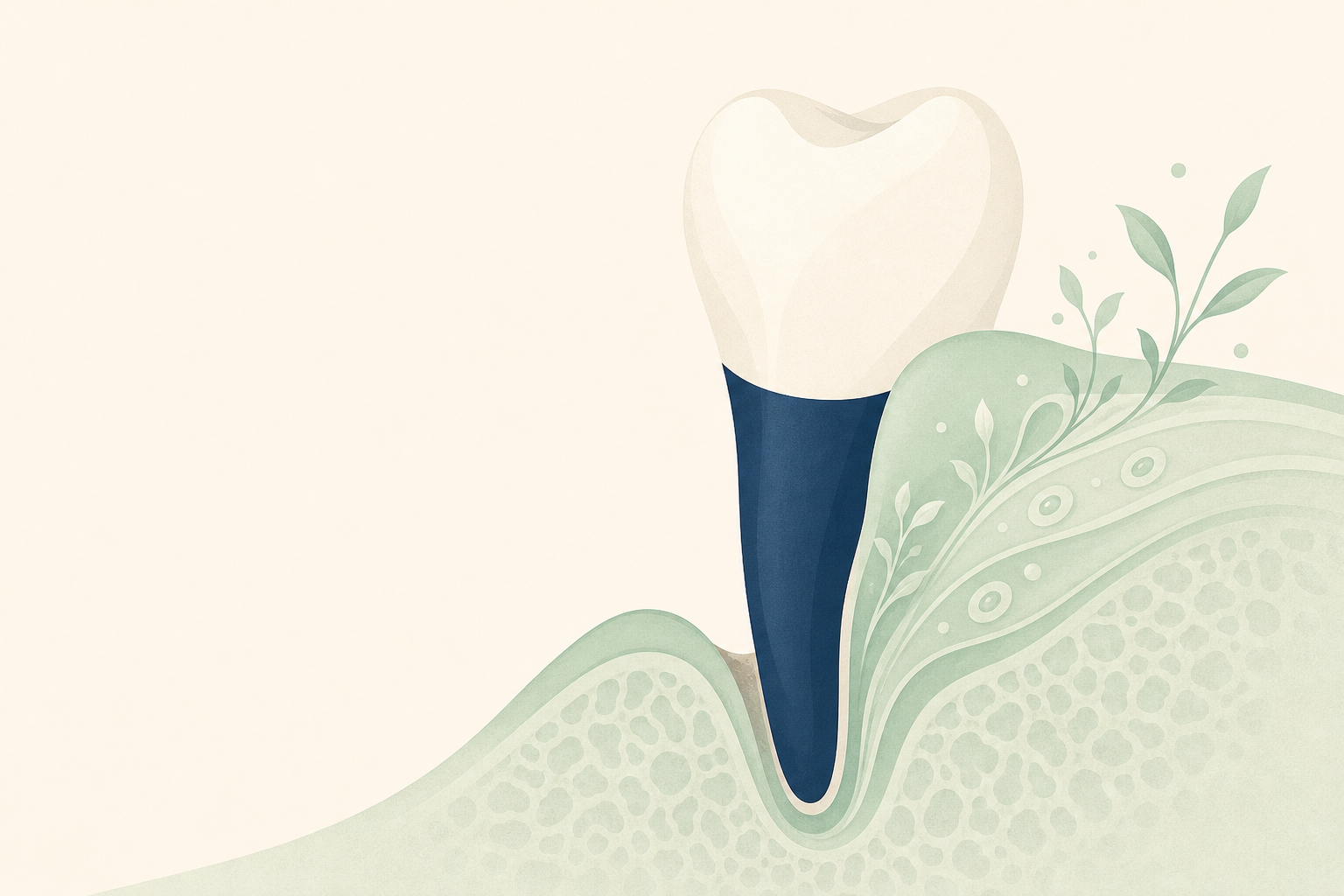
8-slide carousel · storyboard copy
Can lost gum tissue come back?
Sometimes, yes. A periodontist can cover an exposed tooth root by moving nearby gingiva or placing a graft. The result is called root coverage, not a natural regrowth of the original gum.
- Best candidates usually have recession with little or no loss of bone and attachment between teeth.
- Treatment can reduce root sensitivity, protect the root surface and improve the gumline.
- Complete coverage is not possible in every case.
What has actually been lost?
Gingival recession moves the gum margin toward the root apex. This can expose cementum, the mineralised layer covering the root, and may also reduce the band of keratinised gingiva. Causes include periodontal inflammation, thin gum tissue, tooth position, orthodontic movement, trauma from brushing and local anatomy.
- The dentist measures recession depth, probing depth, gum thickness and interdental clinical attachment.
- Bone levels are assessed clinically and, when indicated, with dental imaging.
- An exposed root can be sensitive and is more vulnerable to root caries and non-carious cervical wear.
The treatment protocol
Treatment begins by controlling plaque-related inflammation and correcting contributing factors. After local anaesthetic, the clinician cleans and prepares the root surface, raises a partial-thickness flap, positions tissue over the exposed root and secures it with fine sutures.
- A subepithelial connective tissue graft is commonly harvested from the palate and placed under a coronally advanced flap.
- A xenogeneic collagen matrix or acellular dermal matrix can provide a donor substitute in selected cases.
- Enamel matrix derivative contains enamel-related proteins and may support periodontal wound healing when used with a flap.
- A resorbable barrier membrane can guide healing by limiting fast-growing epithelium while periodontal ligament and connective-tissue cells repopulate the site.
The one rule that protects the result
Keep the area clean without mechanically disturbing the graft during early healing. Follow the surgeon's brushing and rinsing instructions, use the prescribed antimicrobial rinse if advised, avoid pulling the lip to inspect the site and attend review appointments.
- When normal brushing resumes, use a soft brush and light pressure at the gumline.
- Clean between teeth daily. Interdental brushes are preferable where the gap allows; floss remains useful where a brush cannot fit.
- After brushing with fluoride toothpaste, spit and do not rinse with water.
Mythbuster: regeneration is not the same as replacement
A graft does not make the original gum grow back exactly as it was. It adds or repositions soft tissue so the root can heal under stable coverage. Regeneration aims to recreate attachment structures such as periodontal ligament, root cementum and supporting alveolar bone, but that outcome depends on the defect and technique.
- Connective tissue grafting is established treatment for selected recession defects.
- Collagen matrices, enamel matrix derivative and guided tissue regeneration are clinical adjuncts, not universal solutions.
- Stem-cell sheets, engineered scaffolds and injectable biologic therapies remain investigational for routine gum recession care.
Which option fits your mouth?
A single shallow recession on a tooth with intact interdental tissue may suit a coronally advanced flap, often with a connective tissue graft. Multiple thin areas may be approached with a tunnel or envelope technique and a graft or collagen matrix. More advanced recession with interdental attachment loss may receive partial coverage or a different goal, such as increasing tissue thickness and preventing progression.
- A thick palate can provide autogenous connective tissue with its own living cells and blood supply.
- A collagen matrix avoids a second donor wound but is not interchangeable with an autogenous graft in every defect.
- Active periodontitis, uncontrolled plaque, smoking, tooth malposition and traumatic brushing can reduce suitability or stability.
When should you see a dentist?
Arrange an assessment if a tooth looks longer, the root is sensitive, brushing causes bleeding, the gum is tender or the recession is changing. A periodontist can distinguish recession from gum swelling that has reduced after inflammation treatment, and can check for periodontal pockets, bone loss, root caries and cervical wear.
- Seek prompt care for swelling, pus, fever, severe pain, a loose tooth or rapidly changing gum levels.
- Do not wait for pain: recession can progress without symptoms.
- The examination should end with a diagnosis, the cause, treatment options and a maintenance plan.
The practical answer
Gum recession is not always reversible, but exposed roots can often be covered or protected with planned periodontal plastic surgery. Established options include connective tissue grafts, coronally advanced flaps, tunnel techniques, collagen matrices, enamel matrix derivative and selected guided tissue regeneration. The right choice depends on the gum, bone, tooth position and cause.
- Stop the trigger, stabilise inflammation, then choose the tissue procedure that matches the defect.
- Ask Dental Nation for a periodontal assessment and a treatment plan based on measurements, not assumptions.
- Healthy healing and long-term maintenance are part of the treatment, not an afterthought.