A Vaccine Against Cavities? The Real Story Behind the Science
Researchers are targeting the bacterium linked to much dental decay. Here is what exists, what remains experimental, and what protects teeth today.
8-slide carousel · storyboard copy
A vaccine against cavities?
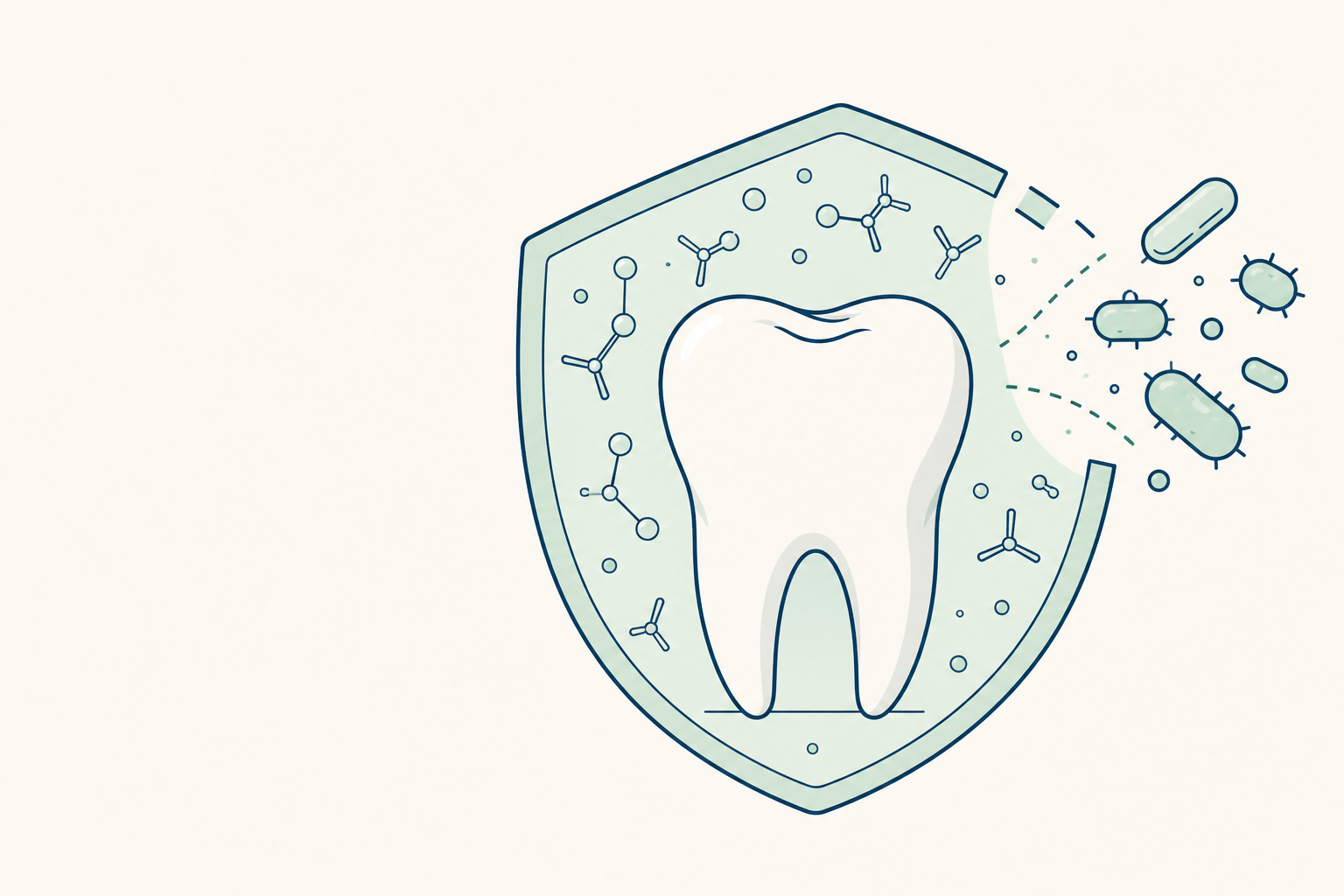
Not yet. Researchers have studied vaccines and antibody treatments aimed at Streptococcus mutans, a bacterium that can contribute to dental caries. No cavity vaccine is currently an established clinical treatment for patients.
Why this bacterium matters
Dental caries begins when bacteria in dental plaque use sugars and starches to produce acids. These acids dissolve minerals from enamel, the hard outer layer of the tooth. Streptococcus mutans can attach to enamel using sticky glucans and can tolerate an acidic plaque environment. Saliva supplies minerals that help repair early mineral loss, but repeated acid attacks can progress to dentine and eventually the pulp.
- A cavity is a bacterial biofilm and mineral-loss disease, not simply a hole caused by sugar.
- Early enamel lesions may be arrested or repaired with fluoride, saliva, and plaque control.
- Once a cavitation reaches dentine, a dentist may need to remove infected tissue and restore the tooth.
What the research protocol is trying to do
Experimental approaches aim to reduce harmful bacterial attachment or neutralise bacterial activity without damaging the wider oral microbiome. Researchers have investigated injected vaccines, oral or nasal vaccines, antibodies, and molecules that interfere with glucan formation. These approaches remain under research because an effective treatment must be safe, durable, and useful in the complex environment of the mouth.
- Identify a target such as bacterial surface proteins or glucosyltransferase enzymes.
- Trigger antibodies that block attachment, aggregation, or acid-producing activity.
- Test safety and effectiveness in laboratory studies, animals, and appropriately controlled human research.
- Confirm that the approach does not cause harmful immune reactions or disrupt beneficial oral bacteria.
The rule that protects teeth today
Use fluoride toothpaste twice daily and spit instead of rinsing with water after brushing. Fluoride helps enamel resist acid and supports remineralisation of early lesions. Brush all tooth surfaces for about two minutes, especially where the gum meets the tooth. Clean between teeth daily with an interdental brush where the space allows, or floss where it does not.
- Use an age-appropriate fluoride toothpaste.
- Do not routinely rinse immediately after brushing.
- Reduce how often teeth are exposed to sugary drinks, sweets, and frequent snacks.
- Do not substitute hydroxyapatite for fluoride as though they were equivalent.
Mythbuster: the headline is ahead of the clinic
A study showing an immune response, fewer bacteria in a laboratory model, or protection in animals is not the same as an approved vaccine for people. At present, dentists do not vaccinate patients against cavities. Fluoride toothpaste, plaque removal, diet control, saliva protection, and evidence-based preventive treatment remain the practical standard.
- Myth: A cavity vaccine is available now. Fact: No established cavity vaccine is routinely used in dental care.
- Myth: Killing one bacterium eliminates decay. Fact: Caries involves a biofilm, diet, saliva, tooth anatomy, and exposure over time.
- Myth: A filling reverses the disease. Fact: A filling repairs lost structure, while prevention must control the causes of further mineral loss.
Make prevention fit your mouth
Risk differs between people. Deep pits and fissures on molars can retain plaque. Crowded teeth can make cleaning difficult. Dry mouth from medicines, dehydration, or medical conditions reduces saliva's protective effect. Braces, exposed root surfaces, and frequent acidic or sugary drinks can also increase risk.
- A dentist may place a resin or glass ionomer sealant in suitable grooves and pits.
- High-risk patients may need prescription-strength fluoride toothpaste or professionally applied fluoride varnish.
- For dry mouth, sip water regularly, use sugar-free gum when appropriate, and ask about medicines that reduce saliva.
- If a white or brown enamel mark, sensitivity, or food trapping appears, arrange an examination rather than waiting for pain.
When to see a dentist
Book an examination for toothache, cold or sweet sensitivity that lingers, a visible hole, swelling, bleeding that persists, a broken filling, or a rough area that catches floss. The dentist may inspect plaque and enamel, use bitewing radiographs when indicated, assess the pulp, and grade caries risk. Treatment can range from fluoride and monitoring to sealants, a restoration, root canal treatment, or extraction when the tooth cannot be saved.
- Pain on biting or spontaneous pain can indicate deeper inflammation and should not be ignored.
- Facial swelling, fever, difficulty swallowing, or difficulty breathing requires urgent dental or medical care.
- A painless cavity can still enlarge because enamel and dentine do not always produce early warning symptoms.
The answer, clearly
A cavity vaccine is a promising research idea, not a treatment you can receive today. The proven actions are simple: fluoride toothpaste twice daily, spit without rinsing, clean between teeth, limit frequent sugar and acid exposure, and treat early disease before it reaches dentine. Dental Nation can assess your individual risk and build a prevention plan around your teeth, saliva, diet, and existing dental work.
- Book a Dental Nation caries-risk assessment.
- Bring a list of medicines if you have dry mouth.
- Keep regular examinations even when nothing hurts.